


 7 minute read
What ID Authentication Technology Stops Fraud Before It Happens?
Identity fraud losses reached USD 27.2 billion in 2024, forcing enterprises to adopt pre‑emptive fraud detection systems that verify identity before granting access. Modern ID authentication tech stack combines multiple verification methods to stop fraudulent transactions at the point of entry rather than detecting them after losses occur.
Financial institutions and multi-location businesses now deploy layered authentication systems that establish identity once and validate it continuously. These systems reduce unrecoverable losses while maintaining regulatory compliance with BSA/AML requirements and Customer Identification Program standards.
Key Takeaways
- Identity verification establishes who users are during onboarding, while authentication confirms their identity during every access attempt
- Biometric solutions achieve 95-99% accuracy and hold 28% of the identity verification market, with projected growth to USD 103.19 billion by 2032
- Phishing-resistant multi-factor authentication grew 63% year-over-year as MFA adoption reached 70% in January 2025
- Combined document and biometric verification reduced customer abandonment from 35% to 8% while cutting fraud incidents by 65%
- Enterprise authentication decisions prioritize security (95% importance) and accuracy (90%) above cost and user experience
What Is the Difference Between Identity Verification and Authentication?
Identity verification and authentication serve distinct functions within fraud prevention technology frameworks. Verification establishes the initial connection between a digital identity and a real person, while authentication confirms that connection during subsequent access attempts.
Understanding this distinction helps enterprises build effective ID authentication systems that protect both onboarding and ongoing access. Each process requires different technologies and operates at different points in the customer lifecycle.
How Does Identity Verification Establish Identity?
Identity verification answers the question "Who are you?" during account creation or onboarding. This one-time process uses document scanning and database checks to confirm that a digital identity matches a real-world person before granting initial access.
Financial institutions use identity verification to meet Know Your Customer and Anti-Money Laundering compliance requirements. The process creates a verified identity record that serves as the foundation for all future authentication attempts.
How Does Authentication Ensure Ongoing Access Security?
Authentication answers the question "Is it still you?" every time a user attempts to log in. This continuous process relies on credentials, biometric scans, or security tokens to confirm that the person accessing the account matches the verified identity.
Modern authentication systems track behavioral patterns and device characteristics to detect account takeover fraud attempts in real time. These systems prevent unauthorized access even when attackers obtain stolen credentials or personal information.
Which Authentication Technologies Are Most Effective Against Fraud?
Multiple authentication technologies demonstrate measurable effectiveness against different fraud vectors. Market data reveals that biometric solutions, document verification, and behavioral analysis each address specific vulnerabilities in digital identity systems.
Enterprise buyers prioritize security and accuracy when selecting authentication technologies for real‑world implementation. Solutions achieving 95% or higher accuracy rates deliver the fraud reduction necessary to justify implementation costs and integration effort.
What Role Do Biometric Solutions Play in Fraud Prevention?
Biometric authentication uses unique biological traits, including facial recognition, fingerprint scanning, and iris scanning, to verify identity. The biometric identification solutions market reached USD 42.23 billion in 2024 and projects growth to USD 103.19 billion by 2032.
Biometric solutions hold approximately 28% of the identity verification market with accuracy rates between 95-99%. These systems prevent identity fraud by requiring physical presence and matching stored biometric templates against live samples during each authentication attempt.
How Does Document Verification Contribute to Identity Assurance?
Document verification confirms the authenticity of government-issued identification through optical character recognition, hologram detection, watermark analysis, and NFC chip reading. This technology holds approximately 22% of the identity verification market and serves as the foundation for regulatory compliance.
Financial institutions use document verification during onboarding to establish identity and meet Customer Identification Program requirements. The process extracts data from ID documents and compares it against authoritative databases to detect forged or altered credentials.
How Does Behavioral Biometrics Detect Account Takeover?
Behavioral biometrics analyzes patterns in human activity, including keystroke dynamics, mouse movement, gait analysis, and device handling patterns. This emerging technology holds approximately 12% of the identity verification market while growing at 26.7% CAGR.
These systems detect account takeover attempts by identifying deviations from established behavioral patterns during active sessions. Behavioral biometrics operates continuously in the background without requiring user interaction or adding friction to the authentication process.
Why Are Multi-Factor and Phishing-Resistant Authentication Essential?
Multi-factor authentication adoption reached 70% in January 2025 as enterprises recognized that single-factor security cannot prevent credential-based fraud. Phishing-resistant implementations grew 63% year-over-year as attackers developed sophisticated methods to bypass SMS-based verification codes.
Traditional MFA using one-time passwords remains vulnerable to real-time phishing and man-in-the-middle attacks. Modern phishing-resistant alternatives use cryptographic keys and device-bound credentials that cannot be intercepted or replayed by attackers.
What Makes Phishing-Resistant MFA More Secure?
Phishing-resistant MFA relies on cryptographic authentication protocols including FIDO2 passkeys and device-bound biometrics. These methods prevent attackers from intercepting authentication factors because credentials never leave the user's device during the verification process.
Organizations deploying phishing-resistant MFA eliminate the primary attack vector used in 86% of online fraud incidents. The technology provides measurable risk reduction while maintaining a user experience comparable to traditional password-based systems.
How Does Passwordless Authentication Improve Security?
Passwordless authentication eliminates passwords entirely by using biometric verification or hardware security keys as the primary credential. This approach removes the weakest element in most authentication systems—the password that users reuse across multiple accounts.
Passwordless adoption doubled in 2025 as enterprises recognized that password management creates both security vulnerabilities and user friction. These systems reduce support costs while preventing credential stuffing attacks that exploit leaked password databases.
How Do Consumer Preferences Influence Authentication Technology Adoption?
Consumer preference data reveals strong adoption barriers for knowledge-based authentication and a clear preference for biometric methods. Survey data shows 72% of consumers globally prefer face biometrics over passwords for secure online processes.
These preferences directly impact enterprise authentication strategies because user friction causes measurable abandonment during account creation. Financial institutions balance security requirements against the reality that 43% of consumers prefer secure face scans via mobile apps when opening new accounts.
Why Are Biometrics Preferred Over Knowledge-Based Methods?
Knowledge-based authentication verifies identity through static questions about personal history or dynamic questions based on credit reports. Research shows users recall security question answers with only 47% success after one year, creating both security vulnerabilities and user frustration.
Consumer surveys indicate 81% view biometrics as more secure than traditional methods, with 53% already using biometric authentication. This preference stems from the convenience of biometric verification compared to remembering multiple complex passwords across different accounts.
How Is User Experience Impacting Technology Choice?
User experience directly affects conversion rates during account onboarding and authentication processes. Enterprises adopting identity authentication technology must balance security requirements against the friction that causes customer abandonment.
Modern AI-driven platforms process verification in under 5 seconds compared to traditional methods requiring days for manual review. This speed improvement reduces abandonment while maintaining the accuracy necessary to prevent fraud at account creation.
What Factors Do Enterprises Consider When Choosing Authentication Solutions?
Enterprise buyers prioritize eight decision factors when evaluating authentication vendors for multi-location deployment. Security ranks highest at 95% importance, followed by accuracy at 90%, and real-time verification capability at 88%.
These priorities reflect the career stakes facing Loss Prevention Directors and Compliance Officers who face personal accountability during audits. Solutions must demonstrate measurable ROI while maintaining the consistency necessary to eliminate exploitable gaps across distributed operations.
How Do Security and Accuracy Shape Vendor Selection?
Security capabilities determine whether authentication systems prevent sophisticated fraud, including deepfake attacks and synthetic identity fraud. Buyers require 95% or higher accuracy to minimize false positives that create customer friction and false negatives that allow fraudulent accounts.
Accuracy metrics directly impact both fraud losses and operational efficiency because manual review becomes necessary when automated systems generate uncertain results. Enterprise deployments require documented accuracy rates across diverse demographic groups and document types to ensure consistent performance.
Why Are Speed and Compliance Critical in Decision-Making?
Modern AI-driven platforms complete verification in under 5 seconds, while traditional manual processes require days for document review. Speed directly impacts conversion rates because only 23% of banks offered digital identity verification in 2020, creating a competitive disadvantage for institutions without real-time capabilities.
Regulatory compliance requirements, including BSA/AML and KYC mandates, create non-negotiable baseline capabilities for identity authentication overview systems. Solutions must generate audit trails documenting every verification decision to protect institutions during regulatory examinations.
How Does Regional and Demographic Variation Affect Technology Use?
Geographic distribution reveals North America holds 31.5% market share, while Europe accounts for 25.1% of global identity verification deployment. Asia-Pacific represents the fastest-growing region at 16.6% CAGR, driven by digital transformation initiatives in India and China.
These regional variations reflect different regulatory frameworks, infrastructure availability, and consumer technology adoption patterns. Enterprises operating across multiple regions require authentication systems supporting diverse document types and regional compliance requirements.
Which Regions Lead in Identity Authentication Adoption?
North America leads authentication technology adoption due to early digital transformation and stringent financial regulations. European markets follow closely with GDPR and eIDAS regulations, driving demand for secure digital identity verification.
Asia-Pacific growth reflects the massive digitization of banking and government services across developing economies. Regional differences in document standards and biometric capture quality require authentication systems with broad international coverage.
How Do Age and Urbanization Influence Authentication Preferences?
Digital banking adoption reaches 82% among US internet users accessing accounts monthly, spanning multiple age demographics. Younger users demonstrate a higher preference for mobile-first biometric authentication, while older demographics show familiarity with knowledge-based methods.
Urban centers achieve higher authentication adoption due to reliable connectivity and concentration of digital-first services. Rural areas face connectivity challenges requiring offline-capable systems, though this gap narrows as infrastructure improves.
What Are the Costs and Scalability Concerns of Different Authentication Methods?
Pricing structures vary significantly based on deployment size, technology complexity, and transaction volume. Small businesses access basic cloud solutions at USD 1.00-2.00 per verification with annual costs between USD 5,000-15,000.
Mid-market enterprises negotiate volume discounts, reducing per-verification costs to USD 0.50-1.50 with annual spending between USD 50,000-200,000. Large financial institutions require custom pricing, typically ranging from USD 500,000 to over USD 2,000,000 annually for enterprise deployments.
How Do Pricing Models Vary by Business Size and Solution Type?
Budget-tier solutions serve small businesses and startups with basic document verification and selfie capture functionality. These cloud-based systems provide standard MFA and basic fraud detection at entry-level pricing accessible to single-location operations.
Premium-tier deployments for large financial institutions include multi-modal biometrics, on-premise options, and custom AI fraud models. Enterprise pricing reflects integration architecture requirements, dedicated support, and compliance documentation necessary for regulated industries.
What Are the Scalability Challenges for High-Volume Enterprises?
High-volume enterprises processing millions of verifications annually face performance degradation without proper infrastructure planning. Scalability requirements include handling traffic spikes during promotional periods and maintaining response times under peak load conditions.
Integration architecture becomes critical when authentication systems must connect with existing identity management platforms and core banking systems. Multi-location deployments require standardized protocols ensuring consistent fraud detection across all access points, regardless of geographic distribution.
How ID Authentication Technology Combines Methods to Prevent Fraud Effectively
Combined authentication approaches demonstrate measurable fraud reduction compared to single-method implementations. Organizations deploying both document and biometric verification reduced customer abandonment from 35% to 8% while achieving 65% decrease in fraud incidents.
Layered systems establish identity through document verification during onboarding, confirm identity with biometric authentication at login, and monitor for anomalies using behavioral analysis during active sessions. This multi-layered approach addresses different fraud vectors throughout the customer lifecycle.
Enterprise authentication strategies require comprehensive guidance addressing technology selection, vendor evaluation, and implementation planning. FraudFighter provides loss prevention directors and compliance officers with proven solutions delivering measurable ROI while maintaining regulatory compliance across multi-location operations.
Stop Identity Fraud Before It Reaches Your Books
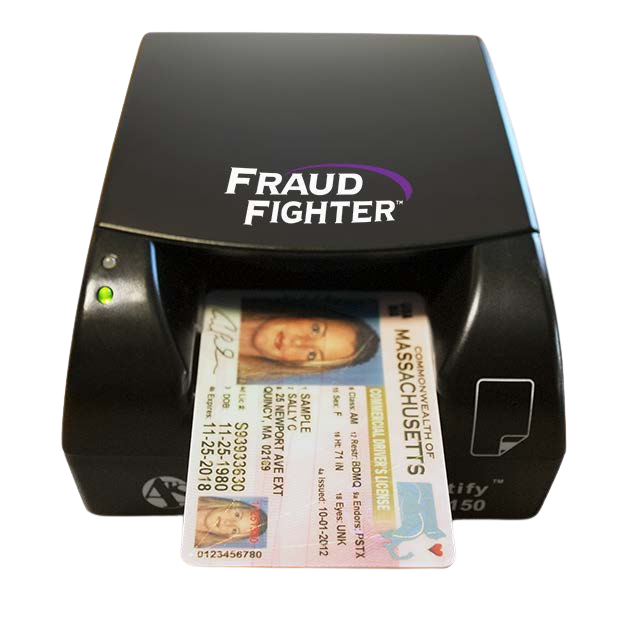
For 25 years, FraudFighter has equipped loss prevention and compliance teams with the tools to verify every ID and authenticate every document at the point of sale. Wells Fargo prevented nearly $200,000 in fraud across 100 branches in 30 days. Avis virtually eliminated vehicle theft from fake IDs. Disneyland controlled counterfeit incidents across an entire park.
Your operation deserves the same protection — without slowing a single transaction. Verify any document in under 10 seconds, generate the audit trail your compliance team needs, and train any employee in minutes.
Organizations seeking to protect against identity fraud while meeting BSA/AML requirements can contact fraud prevention specialists to evaluate authentication technologies appropriate for their risk profile and operational requirements.