


 9 minute read
What Does an Identity Verification Company Actually Do?
Identity verification companies authenticate user identities across digital channels to prevent fraud and ensure compliance. These platforms combine document analysis, biometric authentication, and database validation to confirm individuals are who they claim to be. The global identity verification market reached $16.2 billion in 2024 and continues expanding rapidly. Businesses rely on identity verification services to reduce fraud losses while accelerating customer onboarding processes.
Key Takeaways
- Identity verification companies authenticate users using document analysis, biometric checks, and authoritative database cross-referencing
- Synthetic identity fraud costs billions annually by blending real and fake information into undetectable fictitious personas
- Account takeover caused $16.0 billion in losses during 2024, requiring multi-channel monitoring across digital touchpoints
- Compliance features include real-time sanctions screening, PEP database checks, and comprehensive audit trail documentation
- Automated verification reduces customer onboarding from weeks to days while maintaining regulatory compliance standards
What Is Identity Verification and Why Is It Important?
Identity verification confirms that individuals presenting credentials are legitimate account holders or new customers. This authentication process protects businesses from fraud losses exceeding $27.2 billion annually while ensuring regulatory compliance. Financial institutions face increasing pressure to prevent synthetic identity fraud and account takeover attacks. The identity authentication overview demonstrates how verification systems protect against evolving threats.
What Are the Core Functions of Identity Verification?
Document verification utilizes optical character recognition (OCR) and AI to analyze government-issued ID documents. These systems detect tampering, forgery, and counterfeit credentials by examining security features and document authenticity. Biometric authentication employs facial recognition and liveness detection to ensure physical presence during verification. Real-time liveness checks prevent fraudsters from using stolen photos or deepfake videos.
How Does Identity Verification Differ from Fraud Detection?
Identity verification establishes user authenticity during account creation or high-risk transactions. Fraud detection monitors ongoing activity patterns to identify suspicious behavior after access is granted. Verification occurs at specific checkpoints while fraud detection operates continuously across customer interactions. Both systems work together within an end-to-end verification workflow to provide comprehensive protection.
What Technologies Are Used in Identity Verification?
Document verification utilizes optical character recognition (OCR) and AI to analyze government-issued ID documents. Advanced systems extract data fields while validating security features like holograms and microprinting. Biometric authentication employs facial recognition and liveness detection to ensure physical presence during verification sessions. Data verification cross-references user information against authoritative databases like credit bureaus and government registries.
How Do Identity Verification Companies Combat Synthetic Identity Fraud?
Synthetic identity fraud represents the fastest-growing financial crime affecting banks and lenders nationwide. Fraudsters create fictitious personas by combining real Social Security Numbers with fabricated personal information. These synthetic identities establish credit histories and remain undetected for months without immediate victims. Understanding synthetic ID fraud helps businesses implement effective detection strategies.
What Is Synthetic Identity Fraud?
Synthetic identity fraud involves blending real and fake information to create an entirely new fictitious persona. Fraudsters acquire real Social Security Numbers from vulnerable individuals, including children and deceased persons. They combine SSNs with fabricated names, addresses, and dates of birth to bypass verification systems. These synthetic identities establish new credit profiles using manipulated credentials over extended timeframes.
Synthetic identities go undetected for months or years due to the lack of immediate victim reporting of fraud. Traditional verification systems fail to flag these accounts because they appear as legitimate new customers. The absence of fraud reports allows synthetic identities to build credit histories and increase borrowing limits. Financial institutions lose billions annually before detecting these orchestrated fraud schemes.
How Is Synthetic Identity Fraud Detected?
Identity clustering analyzes relationships between disparate data points to identify clusters of accounts controlled by single entities. Advanced systems monitor shared attributes like phone numbers, IP addresses, and device fingerprints for clustering patterns. Traditional rules-based systems prove inadequate for synthetic identity detection because they rely on historical patterns. Modern AI platforms examine complex relationships between data elements to uncover coordinated fraud networks.
Traditional fraud detection systems fail to flag new accounts with no historical data or activity patterns. Synthetic identities appear clean during initial screening because they lack negative credit history or fraud reports. The technology stack overview for detection includes graph network analysis and behavioral monitoring capabilities. Machine learning models identify subtle anomalies indicating fabricated credentials across seemingly unrelated data points.
What Role Does AI Play in Detection?
AI platforms analyze millions of data points to identify patterns invisible to rules-based systems. Machine learning algorithms detect subtle correlations between accounts sharing similar behavioral characteristics or digital fingerprints. These systems learn from historical fraud cases to predict emerging synthetic identity schemes before losses occur. AI-powered detection reduces false positives while maintaining high accuracy rates for legitimate customer approvals.
How Do Identity Verification Solutions Support Multi-Channel Fraud Prevention?
Multi-channel fraud prevention addresses vulnerabilities across mobile apps, websites, and call centers simultaneously. Fraudsters exploit inconsistencies between channels to bypass security measures and access customer accounts. Comprehensive monitoring across all touchpoints prevents account takeover fraud through coordinated defenses. Real-time risk assessment adapts to threats regardless of channel entry point or attack method.
What Are the Risks of Multi-Channel Account Takeover?
Account takeover (ATO) occurs when fraudsters gain access to legitimate customer accounts through social engineering tactics. Account takeover accounts for $16.0 billion (59%) of total identity fraud losses in 2024 alone. Nearly 20% of fraud cases involved ATO through digital card capabilities, enabling full credential access. Fraudsters exploit features allowing complete card information viewing and digital wallet additions without detection.
Multi-channel vulnerabilities across mobile apps, websites, and call centers create exploitable security gaps for attackers. A 130% increase in mule-related fraud demonstrates how fraudsters move illicit funds through intermediate accounts. Peer-to-peer payment systems and external transfers facilitate rapid fund extraction before detection triggers alerts. Coordinated attacks across multiple channels overwhelm fragmented security systems lacking unified visibility.
What Technologies Enable Multi-Layered Fraud Defense?
Behavioral analytics monitors how users interact with applications, including typing cadence, mouse movements, and navigation patterns. These systems establish baseline behavior profiles for legitimate users to identify anomalous activity patterns. Deviations from normal behavior trigger risk scores that escalate authentication requirements or block transactions. Graph network analysis visualizes complex relationships between entities to track fraudulent money flows across accounts.
How Is Real-Time Monitoring Implemented?
Real-time monitoring analyzes transaction patterns across all channels to detect suspicious activity during sessions. Advanced platforms evaluate risk signals, including device fingerprints, geolocation data, and behavioral biometrics, instantaneously. Automated decision engines approve legitimate transactions while flagging high-risk activities for additional verification steps. Continuous monitoring adapts to emerging threats by updating risk models based on global fraud intelligence.
How Do Identity Verification Companies Ensure Regulatory Compliance?
Regulatory compliance requirements demand rigorous identity verification protocols for financial institutions and regulated industries. The customer identification program mandates verifying customer identities during account opening and ongoing relationships. Verification companies provide automated screening against sanctions lists and continuous monitoring for risk changes. Comprehensive documentation satisfies audit requirements while reducing manual compliance workload for internal teams.
What Compliance Challenges Do Businesses Face?
Businesses must balance stringent regulatory requirements with seamless customer experiences during onboarding processes. Anti-Money Laundering regulations require ongoing monitoring of customer relationships beyond initial verification checkpoints. Multiple regulatory frameworks across jurisdictions create complexity for businesses operating in international markets. Audit preparation demands comprehensive documentation proving that verification procedures meet all applicable compliance standards.
What Features Support AML and Sanctions Screening?
Companies screen against global sanctions lists and PEP databases in real-time during onboarding. Automated systems check customer information against OFAC, EU sanctions, and jurisdiction-specific watchlists instantaneously. Continuous monitoring tracks customer profiles for risk status changes, including new sanctions designations or adverse media. Alert systems notify compliance teams immediately when customer risk profiles change or new matches appear.
How Are Audit Trails and Reporting Managed?
Verification platforms maintain comprehensive documentation for regulatory audits, including timestamps and decision rationale for each verification. Automated reporting generates compliance summaries demonstrating adherence to KYC and AML requirements across customer populations. Tamper-proof audit logs record every verification attempt, decision outcome, and supporting evidence for examiner review. Customizable reports address specific regulatory requirements for different jurisdictions and industry verticals.
How Do Identity Verification Services Impact Business Operations and Customer Experience?
Automated verification transforms customer onboarding from manual, time-intensive processes into streamlined digital experiences. The value proposition for banks includes faster account opening, reduced operational costs, and improved customer satisfaction. Identity authentication products demonstrate how automation delivers measurable business outcomes. Balancing security with convenience remains critical for customer retention in competitive financial services markets.
How Can Verification Automation Improve Efficiency?
Admirals reduced customer registration from six weeks to one day using automated identity verification systems. This dramatic improvement accelerated revenue generation while eliminating customer drop-off during prolonged approval processes. Admirals decreased manual review requirements by 80% while maintaining 100% regulatory compliance across jurisdictions. Automation freed compliance staff to focus on complex cases requiring human judgment and investigation.
What Are the Benefits for Customer Onboarding?
Streamlined onboarding reduces customer abandonment rates by eliminating delays and excessive documentation requirements. Instant verification decisions improve customer satisfaction scores and increase conversion rates for account applications. Digital-first verification supports remote account opening without requiring branch visits or physical document submission. Businesses gain a competitive advantage by offering convenient experiences that match customer expectations for digital services.
How Is Customer Data Validated?
Verification systems analyze government-issued documents using OCR and AI to extract and validate data fields. Advanced platforms examine security features, including holograms, watermarks, and microprinting, to detect counterfeit credentials. Companies perform facial recognition and liveness detection to confirm that the person presenting documents is physically present. Cross-referencing information against authoritative databases verifies consistency across multiple independent data sources simultaneously.
What Are Consumer Expectations and Demographic Trends Related to Identity Verification?
Consumer attitudes toward fraud prevention shape the adoption of security measures and tolerance for verification friction. Understanding demographic vulnerabilities helps businesses design appropriate security controls for different customer segments. The company's role in compliance extends beyond regulatory requirements to protecting customers from financial harm. Security expectations continue rising as fraud losses increase and attack sophistication grows.
What Security Priorities Do Consumers Have?
97% of consumers prioritize fraud prevention effectiveness when selecting financial institutions for banking relationships. Security performance outranks convenience, fee structures, and product offerings in customer decision-making processes. 87% of consumers are willing to spend an extra five minutes on security measures during transactions. This tolerance for friction indicates customers value protection over speed when the stakes are clear.
Which Demographics Are Most Vulnerable to Fraud?
Young adults aged 20-29 report the highest number of fraud incidents due to their active online presence. Job scams and employment-related fraud target younger demographics comfortable sharing information through digital platforms. Older adults aged 70 and above suffer median losses exceeding $1,650 per scam despite fewer incidents. 41% of high-loss scams targeting older adults initiated via phone call using imposter tactics.
How Do Consumers View Responsibility for Fraud Prevention?
67% of consumers believe financial institutions should reimburse scam losses even when customers authorized transactions. This expectation creates pressure for institutions to implement stronger preventive measures to protect customers from themselves. Only 36% believe financial institutions are primarily responsible for scam protection despite reimbursement expectations. This disconnect highlights the need for partnership between institutions and customers in fraud prevention.
What Are the Leading Identity Verification Solutions for Different Business Needs?
Solution selection depends on specific use cases, transaction volumes, and integration requirements for existing systems. Identity verification platforms vary significantly in deployment models, pricing structures, and feature capabilities. Budget constraints and scalability requirements influence platform selection for businesses at different growth stages. Comprehensive evaluation of vendor capabilities ensures solutions address current needs and future expansion plans.
How Do Solutions Vary by Deployment and Cost?
Budget synthetic identity detection ranges from $5,000-$50,000 setup costs versus premium custom enterprise pricing models. Mid-range solutions typically cost $200,000-$500,000 annually for comprehensive synthetic identity monitoring and detection. Budget multi-channel prevention costs $699-$5,000 monthly, while premium solutions require custom enterprise pricing negotiations. Identity verification transaction costs range from $0.30-$2.50 for budget tiers to $1.35-$1.85 for mid-range platforms.
Budget compliance and AML solutions start at $5,000-$50,000 setup fees for basic screening capabilities. Premium compliance platforms exceed $200,000-$500,000 annually for comprehensive global coverage and advanced monitoring features. Transaction-based pricing models suit businesses with variable verification volumes, while subscription models benefit consistent users. Enterprise agreements typically include volume discounts and custom service level agreements for large organizations.
What Are Examples of Popular Identity Verification Providers?
ComplyAdvantage provides sanctions and watchlist screening solutions for financial institutions and regulated businesses globally. Automated screening against international databases reduces manual research time while ensuring comprehensive coverage of sanctions lists. Sumsub offers identity verification and compliance solutions combining document analysis with biometric authentication capabilities. Multi-jurisdictional support enables businesses to verify customers across different regulatory environments with unified workflows.
Onfido provides identity verification services using AI-powered document analysis and facial biometric technology. Real-time verification delivers instant decisions while maintaining high accuracy rates for legitimate customer approvals. Understanding what verification companies do helps businesses evaluate vendor capabilities against specific requirements. Platform selection should consider integration complexity, support quality, and long-term vendor stability.
How Do Solutions Integrate with Fraud Detection?
Modern platforms combine identity verification with ongoing fraud detection through unified risk management dashboards. Initial verification establishes baseline customer profiles that inform continuous monitoring for behavioral anomalies and suspicious activities. API integrations connect verification systems with existing fraud detection tools to share risk signals across platforms. Consolidated reporting provides holistic visibility into both verification performance and fraud detection effectiveness metrics.
The Role and Impact of Identity Verification Companies in Building Digital Trust and Fraud Prevention
Identity verification companies establish the foundation for digital trust by confirming user authenticity before granting access. Consumers lost $27.2 billion to identity fraud in 2024, representing a 19% year-over-year increase. The global fraud detection and prevention market reached $33.13 billion in 2024 and is projected to reach $90.07 billion by 2030. The identity verification market valuation of $16.2 billion in 2024 reflects growing demand for authentication solutions.
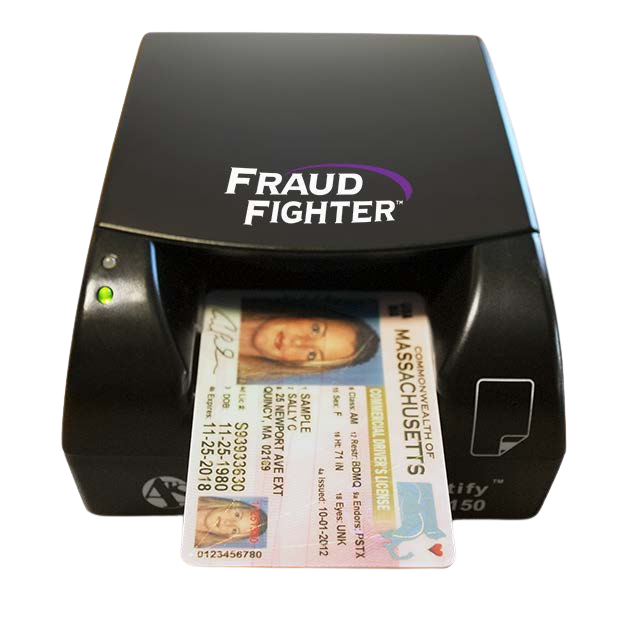
These platforms reduce operational costs while improving customer experiences through automated verification workflows and instant decisions. Verification automation delivers measurable ROI through reduced fraud losses, lower manual review requirements, and faster customer onboarding. Businesses gain a competitive advantage by offering secure, convenient digital experiences meeting customer expectations for modern services. FraudFighter™ provides comprehensive verification solutions protecting organizations from career-ending fraud incidents while ensuring regulatory compliance.
Ready to Stop Identity Fraud at Your Point of Sale?
Identity verification only matters if it works where the transaction happens — at the teller window, the rental counter, the cage, the dealership desk. For over 25 years, FraudFighter™ has built the tools that frontline teams actually use under real-world pressure.
Your team doesn't need more training. They need the right tools — ones that authenticate documents in under 10 seconds, train any employee in minutes, and meet SOC 2 Type II security standards.
Don't wait for fraud to find you. Request a free consultation with FraudFighter™ and see how proven verification technology can protect your business, your compliance record, and your reputation.