

 11 minute read
How Does Counterfeit Currency Detection Protect Your Cash Flow?
Counterfeit currency poses a direct threat to business cash flow because banks do not reimburse deposited fake bills. Once counterfeit notes enter your cash handling process, the financial loss becomes permanent. Detection technologies identify fraudulent currency at the point of transaction, preventing these losses before the bank deposit.
The counterfeit detection market addresses increasing fraud sophistication through automated verification systems. Modern counterfeiters replicate security features that untrained employees cannot identify during high-volume transaction periods. Automated detection removes reliance on manual inspection and ensures consistent fraud prevention across all locations.
Key Takeaways
- Automated counterfeit detection prevents irreversible losses by identifying fake currency before a bank deposit
- Multi-detection systems combine UV, magnetic, and infrared technologies for superior verification accuracy
- Banking institutions hold 55.1% market share, while retail accounts for 25.0% of detection adoption
- AI-powered solutions demonstrate measurable ROI with documented $6 million fraud reduction in retail banking
- Large enterprises show 92% adoption rate compared to 38% for small businesses
What Is Counterfeit Currency Detection and Why Is It Important?
Counterfeit currency detection uses specialized technologies to verify banknote authenticity by analyzing embedded security features. Detection systems examine ultraviolet markings, magnetic ink properties, infrared patterns, and physical dimensions. These automated processes identify fraudulent bills that bypass visual inspection.
The importance of counterfeit money detection stems from non-recoverable loss exposure and regulatory compliance requirements. Businesses accepting counterfeit currency cannot claim reimbursement from banking institutions. Financial institutions and retailers must demonstrate due diligence through documented fraud prevention measures to satisfy Bank Secrecy Act and Anti-Money Laundering regulations.
What Are the Common Types of Counterfeit Currency Detection Technologies?
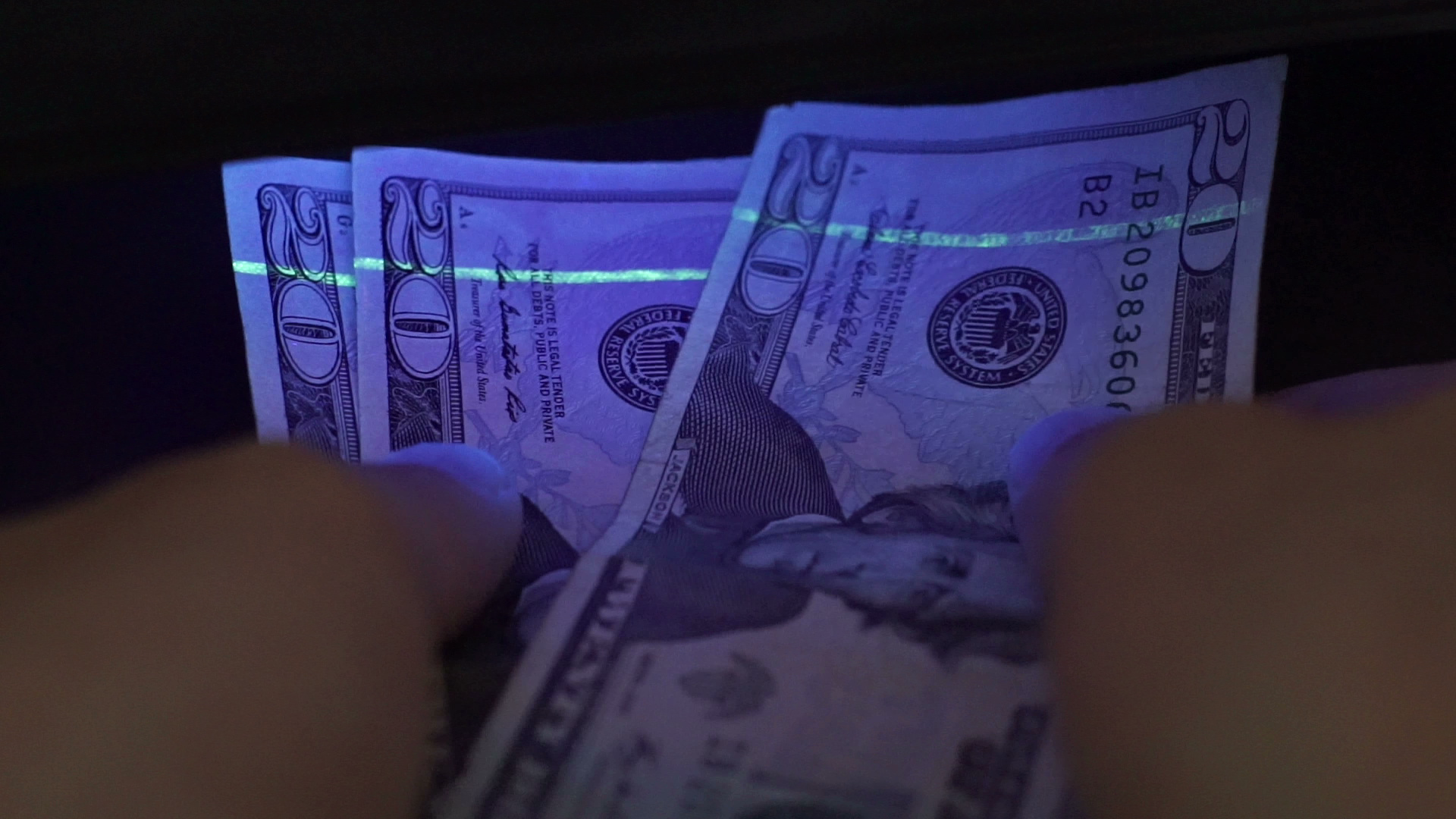
UV detectors use ultraviolet light to reveal invisible security features on banknotes, such as fluorescent fibers and security threads. Magnetic detection devices recognize the magnetic properties embedded in genuine currency ink that counterfeiters struggle to replicate. Multi-detection systems integrate UV, magnetic, infrared, and dimensional checks for comprehensive authentication.
RFID uses Radio Frequency Identification tags embedded in products for wireless verification without line-of-sight requirements. NFC uses Near Field Communication tags for cryptographically protected verification through tap-to-verify smartphone authentication. These wireless technologies enable supply chain tracking and product authentication beyond traditional currency verification.
How Does Counterfeit Money Impact Businesses and Cash Flow?
Counterfeit bills create immediate, permanent financial losses because banking institutions reject fraudulent deposits without reimbursement. Each accepted fake note directly reduces operating capital and creates reconciliation discrepancies that complicate financial reporting. The currency validation impact extends beyond face value to include staff time investigating discrepancies and potential regulatory scrutiny.
A case study in retail banking demonstrated a $6 million reduction in potential fraudulent transactions using semi-supervised ML models. This documented outcome represents measurable CFO fraud prevention metrics that justify detection technology investments through quantifiable loss prevention. Machine learning systems continuously adapt to emerging counterfeit patterns and provide audit trails documenting compliance efforts.
Which Sectors Benefit Most from Counterfeit Currency Detection?
Banking and financial institutions hold 55.1% market share in counterfeit detection technology adoption. Retail and e-commerce account for 25.0% market share as high-volume cash handling environments face significant exposure. These sectors prioritize detection because counterfeit acceptance creates unrecoverable losses impacting quarterly financial performance.
Transaction volume and regulatory requirements drive sector-specific adoption patterns. Banks require detection for note recycling, ATM loading, and regulatory compliance documentation. Retail chains need frontline verification at checkout locations where transaction speed cannot compromise customer experience.
How Do Retail and Banking Sectors Differ in Detection Needs?
Urban banking adoption reaches 92% compared to 45% rural adoption due to transaction volume differences. Urban retail adoption stands at 85% versus 32% rural adoption, reflecting infrastructure availability and fraud exposure levels. Metropolitan areas experience higher counterfeit circulation and possess better access to technology vendors and technical support.
Banking institutions prioritize high-accuracy verification for note recycling and require processing times under 10 seconds per bill. Retail operations focus on frontline detection at point-of-sale locations where multi-currency capability prevents customer delays. These operational differences create distinct product requirements despite both sectors addressing identical fundamental risks.
What Are Consumer and Business Priorities for Selecting Detection Solutions?
Accuracy ranked 95% importance versus Speed 88%, Cost 82%, User-Friendliness 78%, and Integration Capabilities 75%. Detection accuracy prevents false positives that delay legitimate transactions and false negatives that allow counterfeit acceptance. Businesses prioritize verification certainty over operational speed because a single missed counterfeit creates losses exceeding equipment costs.
Cash flow protection strategies require balancing detection thoroughness with transaction processing speed during peak hours. Enterprise buyers demand integration capabilities connecting detection systems with existing point-of-sale and cash management infrastructure. Small businesses emphasize user-friendliness because high employee turnover limits training investment and requires intuitive operation.
How Do Different Counterfeit Detection Technologies Work?
Detection technologies analyze specific security features embedded in genuine currency that counterfeiters cannot economically replicate. Single-method detectors examine one security characteristic while multi-detection systems verify multiple features simultaneously for superior accuracy. Technology selection depends on counterfeit sophistication levels, transaction volumes, and acceptable false positive rates.
Counterfeit detectors range from manual UV lights requiring operator interpretation to fully automated systems providing instant pass-fail determinations. Hardware solutions offer immediate verification without internet connectivity, while software platforms enable centralized monitoring and adaptive learning. The optimal approach combines multiple detection methods, creating layered security addressing diverse counterfeiting techniques.
What Are the Features of UV and Magnetic Detection Devices?
UV detection reveals fluorescent fibers and security threads on banknotes invisible under normal lighting. Magnetic ink properties in genuine currency create detectable patterns that counterfeiters struggle to replicate without specialized materials. These single-method detectors cost between $50-$400 depending on automation level.
UV detectors remain vulnerable to sophisticated counterfeits using fluorescent ink and require manual interpretation. Magnetic detectors cannot identify all security features and require periodic calibration. UV detectors process bills quickly but demand operator training to distinguish genuine fluorescence patterns.
How Do Multi-Detection Systems and AI-Powered Software Enhance Verification?
Software solutions use machine learning and AI to analyze product images and documentation across expanding counterfeit databases. Machine vision and AI solutions are growing at 5.6% CAGR as systems learn from new fraud patterns. These platforms provide detailed analytics documenting counterfeit exposure and demonstrate compliance efforts during regulatory audits.
Software solutions require internet connectivity for cloud-based pattern matching and incur recurring subscription costs. Multi-detection systems have higher initial costs ranging from $150-$1,500 and require periodic maintenance. Implementation complexity increases with integration requirements, but automated systems eliminate human error from high-volume verification.
What Role Do Integrated POS and RFID/NFC Technologies Play?
Approximately 68% of US retail chains use integrated detection in POS systems for seamless transaction processing. Cryptographically protected NFC tags enable wireless verification through smartphone authentication without specialized reader equipment. Supply chain tracking using RFID technology monitors product movement and authenticates inventory throughout distribution networks.
Integrated POS systems have high implementation costs ranging from $50,000-$500,000 and complex integration requirements. RFID tags cost $0.50-$5+ per unit versus lower-cost barcodes but provide tamper-evident authentication. These technologies extend verification beyond currency to product authentication, reducing counterfeit merchandise exposure.
What Are the Trends Shaping Counterfeit Currency Detection?
The global anti-counterfeiting solutions market reached USD 199.9 billion in 2025 and projects growth to USD 456.2 billion by 2032. Software and SaaS platforms are expanding at 6.5% CAGR as businesses shift toward cloud-based fraud monitoring. This growth reflects increasing counterfeit sophistication requiring adaptive detection technologies that update automatically without hardware replacement.
Counterfeit currency detection ROI becomes measurable through documented loss prevention and regulatory compliance cost avoidance. Organizations quantify financial risk mitigation by tracking prevented counterfeit acceptance against detection system investment and operating costs. Market expansion demonstrates that detection technology delivers positive returns compared to unrecoverable counterfeit losses and compliance penalties.
How Is AI Changing Detection Accuracy and Adaptability?
AI systems continuously learn from new counterfeit patterns and update detection algorithms without manual reprogramming. Machine learning models analyze millions of bill images to identify subtle variations invisible to human inspectors. These adaptive systems reduce false positives that frustrate customers and false negatives that create financial losses.
Neural networks process multiple security features simultaneously and weight their relative importance based on historical fraud data. Supervised learning models trained on documented counterfeit samples achieve accuracy rates exceeding 99%. Real-time adaptation enables systems to recognize newly circulating counterfeits within hours rather than weeks.
Why Are Integrated Systems Becoming Preferred in Retail and Banking?
Integrated systems eliminate manual handoff between transaction processing and fraud verification, reducing customer wait times. Automated verification embedded in POS terminals creates audit trails documenting compliance efforts without additional employee responsibilities. These systems standardize fraud prevention protocols across multiple locations, addressing inconsistencies in manual detection procedures.
Banks require seamless integration for high-speed note processing during cash recycling and ATM replenishment. Retail chains demand solutions that maintain transaction speeds while providing instant counterfeit alerts. Integration reduces training requirements because verification occurs automatically within existing transaction workflows.
How Are Multi-Layered Security Approaches Improving Cash Protection?
Multi-currency capability in automatic detection systems accommodates international transactions without requiring separate verification equipment. Layered approaches combine physical hardware detection with digital tracking technologies like RFID and secure authentication protocols. This redundancy ensures that sophisticated counterfeits bypassing one security layer trigger alerts through alternative verification methods.
Hardware detectors verify immediate transaction authenticity while software platforms aggregate data identifying systematic fraud patterns across locations. Combining real-time verification with analytical monitoring enables proactive response to emerging threats before significant losses accumulate. Multi-layered strategies align with regulatory expectations, demonstrating comprehensive due diligence.
How Does Business Size and Location Affect Detection Adoption?
Large enterprises show 92% adoption rate driven by substantial revenue exposure and brand reputation protection. Mid-market companies have 68% adoption rate, balancing loss prevention needs against technology investment constraints. Small businesses have 38% adoption rate, and micro-businesses have 15% adoption rate, reflecting budget limitations.
Business size correlates directly with transaction volume and counterfeit exposure probability, requiring systematic detection protocols. Enterprise organizations implement standardized detection across all locations to eliminate weak points that fraud operations target. Smaller businesses often delay adoption until experiencing direct counterfeit losses.
What Are the Adoption Rates Among Large, Mid-Market, and Small Businesses?
Large enterprises deploy detection systems across all cash handling locations to protect quarterly earnings. Mid-market companies selectively implement detection at high-volume locations while monitoring smaller branches for fraud indicators. Small businesses frequently rely on manual verification until counterfeit incidents justify technology investment.
Micro-businesses face the lowest adoption at 15% because limited transaction volumes reduce perceived fraud exposure. However, single counterfeit incidents create proportionally larger financial impact on smaller operating budgets. Employee turnover in smaller operations makes manual detection unreliable, strengthening the case for automated verification.
How Do Urban and Rural Areas Differ in Using Detection Technologies?
Urban markets demonstrate higher adoption because transaction density and counterfeit circulation rates justify technology investments. Rural areas experience lower fraud exposure but possess limited access to technology vendors and technical support. Metropolitan banking shows 92% adoption versus 45% rural adoption, reflecting these operational differences.
Urban retail reaches 85% adoption compared to 32% rural adoption despite similar per-transaction risks. Geographic concentration in urban markets enables cost-effective technology deployment and vendor service coverage. Rural businesses often operate without nearby technical support, creating reluctance to adopt technologies requiring calibration.
Which Regions Lead and Which Are Emerging Markets for Detection Solutions?
North America leads with 38.5% revenue share in 2024, supported by stringent regulatory frameworks and high awareness. Europe follows with 28.0% market share, driven by multi-currency environments requiring sophisticated detection capabilities. Regional leadership reflects mature fraud prevention markets where detection technology represents standard business practice.
Asia-Pacific is projected to expand at 6.9% CAGR through 2030, driven by rapid industrialization and retail modernization. Emerging markets experience accelerating counterfeit circulation as cash economies transition toward formal banking systems. Growth in these regions creates opportunities for scalable detection solutions addressing diverse currency types.
How Do Pricing and Product Categories Influence Detection Choices?
Currency-detector machines dominate with 39.4% market share, offering standalone verification for frontline operations. UV scanners account for 28.6% of the market, providing entry-level detection for budget-conscious businesses. Software and SaaS platforms are expanding at 6.5% CAGR as organizations prioritize centralized monitoring and adaptive capabilities.
Product category selection reflects operational requirements, transaction volumes, and integration needs. Hardware solutions require upfront capital investment ranging from $50 for basic UV lights to $1,500+ for multi-detection systems. Software platforms involve recurring subscription costs between $500-$10,000+ monthly, depending on transaction volumes.
What Are the Price Ranges and Benefits of Key Detection Categories?
Budget UV detectors cost $50-$100 and provide basic fluorescence verification for low-volume operations. Mid-range magnetic detectors price between $120-$250 and detect sophisticated counterfeits through ink property analysis. Premium multi-detection systems cost $600-$1,500+ and verify multiple security features simultaneously.
Software platforms range from $500-$2,000 monthly for basic fraud monitoring to $10,000+ monthly for enterprise analytics. Hardware investments create one-time capital expenditures while software platforms distribute costs across operating budgets. Cost structures influence purchasing decisions as businesses evaluate immediate budget impact versus long-term expenses.
How Do Software Platforms Compare to Hardware-Based Solutions?
Software platforms enable centralized monitoring across multiple locations and provide detailed analytics for compliance documentation. Hardware devices offer immediate verification without internet dependency and avoid recurring subscription costs after initial purchase. Platform selection depends on organizational structure, with multi-location operations favoring centralized software.
Cloud-based solutions automatically update detection algorithms as new counterfeit patterns emerge. Hardware systems require physical upgrades or replacements to address evolving fraud techniques. Integration capabilities favor software platforms connecting with existing transaction systems, while hardware provides reliable operation with limited connectivity.
What Should Businesses Consider When Budgeting for Detection Technology?
Businesses should calculate the total cost of ownership, including purchase price, maintenance, training, and integration expenses over the expected system lifespan. Detection investment justification requires quantifying potential counterfeit losses based on transaction volumes and historical fraud rates. ROI calculations compare prevention benefits against unrecoverable losses and regulatory compliance cost avoidance.
Budget considerations must account for scalability as transaction volumes grow and counterfeit sophistication increases. Organizations should evaluate vendor support availability, replacement part costs, and software subscription escalation. Technology standardization across locations reduces training costs and enables bulk purchasing discounts.
What Drives Consumer Behavior Related to Counterfeit Currency?
More than half of global consumers knowingly purchase counterfeit products driven by hedonic motives rather than economic benefits. Two-thirds of consumers reported being duped into buying counterfeits while shopping online. This consumer behavior creates circulation channels that increase counterfeit exposure for legitimate businesses.
Counterfeit purchasing patterns demonstrate that fraud education alone cannot eliminate counterfeit circulation. Businesses must implement systematic detection because consumer demand sustains counterfeit production regardless of legal consequences. Automated verification protects businesses from counterfeit currency originating through both intentional and unintentional consumer participation.
Why Do Consumers Purchase Counterfeit Goods Despite Risks?
Impulse buying and shopping rituals drive counterfeit purchases beyond simple price considerations. Hedonic motivations include the excitement of finding deals and the social status associated with luxury brand ownership. These psychological factors sustain counterfeit markets even when consumers understand quality limitations and legal risks.
Online shopping environments reduce perceived purchase risks because digital transactions lack physical inspection opportunities. E-commerce platforms provide counterfeiters with anonymous distribution channels reaching global consumer bases. Digital marketplaces complicate enforcement efforts and enable rapid counterfeit operation relocation following platform removals.
How Do Demographics Influence Counterfeit Purchasing Patterns?
Younger consumers more frequently buy counterfeits than older demographics, reflecting different brand loyalty and authenticity priorities. Males demonstrate a higher likelihood of purchasing counterfeits than females across multiple product categories. Lower-income households show increased counterfeit purchasing driven by aspirational brand desire exceeding available disposable income.
Larger households purchase counterfeits more frequently than smaller households, suggesting family budget pressures influence authenticity trade-offs. Demographic patterns help businesses predict counterfeit exposure levels in specific markets requiring enhanced detection. Understanding consumer behavior informs risk assessment when evaluating detection technology investment priorities.
How Does Counterfeit Currency Detection Affect Consumer Confidence?
Visible detection systems at retail locations signal security awareness and reduce consumer concerns about transaction safety. Automated verification protects consumers from receiving counterfeit bills as change during legitimate purchases. Detection technology demonstrates business commitment to transaction integrity, strengthening brand reputation and customer trust.
Consumer confidence increases when businesses implement transparent fraud prevention measures, demonstrating transaction security. Public-facing detection creates marketing differentiation for businesses competing on trust and security. Investment in visible detection technology communicates operational sophistication, influencing consumer choice among competing service providers.
How Counterfeit Currency Detection Safeguards and Sustains Your Cash Flow
The global anti-counterfeiting solutions market, valued at USD 199.9 billion in 2025, is projected to reach USD 456.2 billion by 2032. The counterfeit money detection market, valued at USD 4.10 billion in 2025, is expected to grow to USD 5.31 billion by 2030. This expansion reflects increasing recognition that detection technology delivers measurable returns through prevented losses and compliance cost avoidance.
The counterfeit detection devices market, valued at USD 2.8 billion in 2024, demonstrates sustained investment in hardware solutions. Software platforms expanding at 6.5% CAGR indicate shifting preference toward adaptive technologies that update automatically. Market growth validates that detection investments generate positive counterfeit currency detection ROI when compared against unrecoverable losses and regulatory penalties.
Detection technology implementation requires evaluating operational requirements, transaction volumes, and integration capabilities before vendor selection. Organizations should document current counterfeit exposure through historical loss data and calculate prevention benefits using conservative fraud rate assumptions. Vendor evaluation must include support availability, training requirements, and total ownership costs.
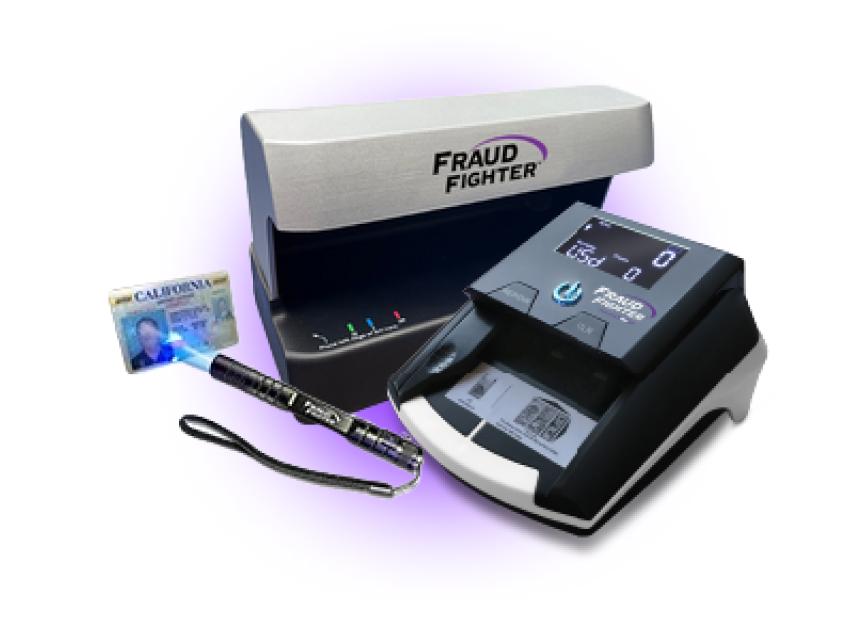
FraudFighter™ provides identity authentication and verification solutions supporting comprehensive fraud prevention programs across banking and retail operations. Documented case studies demonstrate measurable outcomes, including Wells Fargo's 2,000%+ ROI and Bank of America's $1M+ savings, validating detection technology effectiveness. Learn more about implementing systematic fraud prevention through our counterfeit fraud prevention white papers documenting industry best practices and compliance strategies.
Protect Your Cash Flow Before the Bank Rejects the Deposit
Counterfeit losses become permanent the moment they leave your register. By the time the bank flags a fake bill, the money is already gone — and so is your ability to recover it. The only point where intervention still works is the point of transaction.
FraudFighter has spent 24+ years building the counterfeit detection technology that closes that window. Wells Fargo prevented $200,000 in counterfeit losses across 100 branches in a 30-day trial. Bank of America saved over $1 million in eight months. Disneyland nearly eliminated counterfeit acceptance across its parks after deploying our units in merchandise locations. The same UV scanners, automatic detectors, and verification systems are available for any cash-handling environment — with training measured in minutes and pass/fail results delivered in seconds.
To protect your business from unrecoverable counterfeit losses, contact FraudFighter for a free consultation and a recommendation matched to your transaction volume, compliance requirements, and budget. Cash-heavy operations often add a sturdy CountEasy Money Counter to the mix, so daily totals come together fast and every deposit leaves the building already balanced.