


 10 minute read
Check Cashing Counterfeit and ID Risk: A Compliance Companion for High-Volume Locations
Check cashing counterfeit and ID risk lands on one employee who has seconds to decide. High-volume check cashing locations must release cash quickly while verifying the person, the instrument, and the transaction. Mortgage lenders need confidence in borrower identity and documentation before advancing applications or funding loans. Both contexts are exposed when document review rests only on a rushed employee’s visual judgment, and FBI IC3 data shows that reported fraud losses reached $16.6 billion in 2024.
Below, you’ll find how counterfeit currency detection, ID verification for business, and documented escalation procedures make fraud prevention consistent from shift to shift. We cover the Bank Secrecy Act, the Customer Identification Program, and the Red Flags Rule, then show how the controls used at the counter and by mortgage services teams support compliance while reducing career-damaging fraud exposure.
Key Takeaways
- Check cashing counterfeit and ID risk drops when locations replace employee guesswork with repeatable, documented verification steps.
- Counterfeit currency detection, ID authentication, and transaction-pattern review each cover a different failure point, so high-volume sites need all three.
- The Bank Secrecy Act, the Customer Identification Program, and the Red Flags Rule set written-procedure, recordkeeping, and escalation duties that frontline tools have to support.
- Mortgage lending spreads identity and document risk across application, underwriting, and funding, while check cashing concentrates it in a single counter transaction.
- FraudFighter™ supplies counterfeit detection, ID verification for business, and audit-ready records, backed by more than 25,000 installed units and 25 years in the field.
Check Cashing Counterfeit and ID Risk Starts at the Front Counter
Check cashing and mortgage services both require frontline staff to verify identity and document authenticity under operational pressure. Time constraints and manual review without tools create the inconsistency that fraud schemes exploit.
Time Pressure Shapes Frontline Fraud Decisions
High-volume settings push staff to process transactions quickly, which makes unaided manual review risky. Relying on employee eyesight alone creates inconsistency, and training is necessary but not sufficient without repeatable checks and records. A fake ID, counterfeit bill, altered check, or suspicious transaction that should have been caught can become a career-damaging failure for both the employee and the organization.
Identity and Document Verification Carry the Most Weight
The FBI Internet Crime Complaint Center reported 859,532 complaints in 2024, with $16.6 billion in reported losses. Losses increased 33 percent from 2023, and 256,256 of the 2024 complaints reported an actual loss. The average reported loss per complaint was $19,372, which sets the financial scale of fraud and identity crime and explains why point of sale fraud prevention now sits inside compliance reviews.
|
Reported measure |
2024 figure |
What it means at the counter |
|
Total complaints |
859,532 |
Reported fraud and cybercrime nationwide |
|
Reported losses |
$16.6 billion |
A 33 percent increase over 2023 |
|
Complaints with an actual loss |
256,256 |
About three in ten reports carried a loss |
|
Average loss per complaint |
$19,372 |
Scale of a single missed transaction |
|
Identity theft complaints |
21,403 |
Bears on ID authentication at the window |
|
Credit card and check fraud complaints |
12,876 |
Bears on instrument verification |
|
Real estate complaints |
9,359 |
Bears on mortgage document review |
Check Cashing and Mortgage Lending Share the Same Verification Burden
Check cashing releases cash immediately and requires verification of the person, the instrument, and the transaction under time pressure. Mortgage lending involves borrower identity, application documents, and credit-account controls across the loan process. Both depend on frontline identity and document checks, but file review and counter review create different operational pressures and call for different tooling.
Check Cashing Counterfeit and ID Risk Falls Under Three Compliance Frameworks
Regulatory frameworks set identity verification, suspicious activity reporting, and red flag detection duties for financial institutions and money services businesses. Knowing what each asks for helps an organization design procedures that hold up in an examination.
Bank Secrecy Act and Suspicious Activity Report Requirements
Suspicious Activity Report rules for money services businesses require reporting suspicious transactions involving or aggregating at least $2,000. The SAR threshold for review of clearance or similar records for money orders or traveler’s checks is at least $5,000. Each MSB must file each SAR no later than 30 calendar days after initial detection of the facts that may form a basis for filing. Meeting that window depends on frontline staff flagging the transaction on the day it happens.
Customer Identification Program Requirements for Verification Practices
The Customer Identification Program requires risk-based procedures for verifying customer identity to the extent reasonable and practicable. CIP procedures must let the institution form a reasonable belief that it knows the true identity of each customer. Document authentication and driver license authentication give that belief something measurable to rest on, and the retained record shows an examiner what was reviewed.
The FTC Red Flags Rule and Identity Theft Detection
The Red Flags Rule requires many organizations to maintain a written identity theft prevention program. An ID that does not look genuine is a red flag when a customer presents identification to open an account. Once fake IDs are named as a red flag, the business must have procedures to detect possible fake, forged, or altered identification. A fake ID scanner turns that procedure into a pass or fail result rather than an opinion.
|
Framework |
Core requirement |
Front-counter action |
|
Bank Secrecy Act and SAR rules |
Report suspicious transactions at or above $2,000 for MSBs, filed within 30 calendar days |
Log the flag the same day and route it to compliance |
|
Customer Identification Program |
Risk-based procedures sufficient to form a reasonable belief of true identity |
Authenticate the ID and retain the record of what was checked |
|
FTC Red Flags Rule |
Written identity theft prevention program with detection procedures |
Run the ID through a defined pass or fail check and escalate failures |
Frontline Controls That Reduce Operational Fraud Risk
Identity verification solutions and counterfeit detection for banks help frontline teams reach consistent decisions without relying on subjective judgment. Documented procedures and escalation protocols turn fraud prevention from a training topic into a procedure a new hire can follow on day one.
Tools for Detecting Counterfeit Currency and Altered Checks
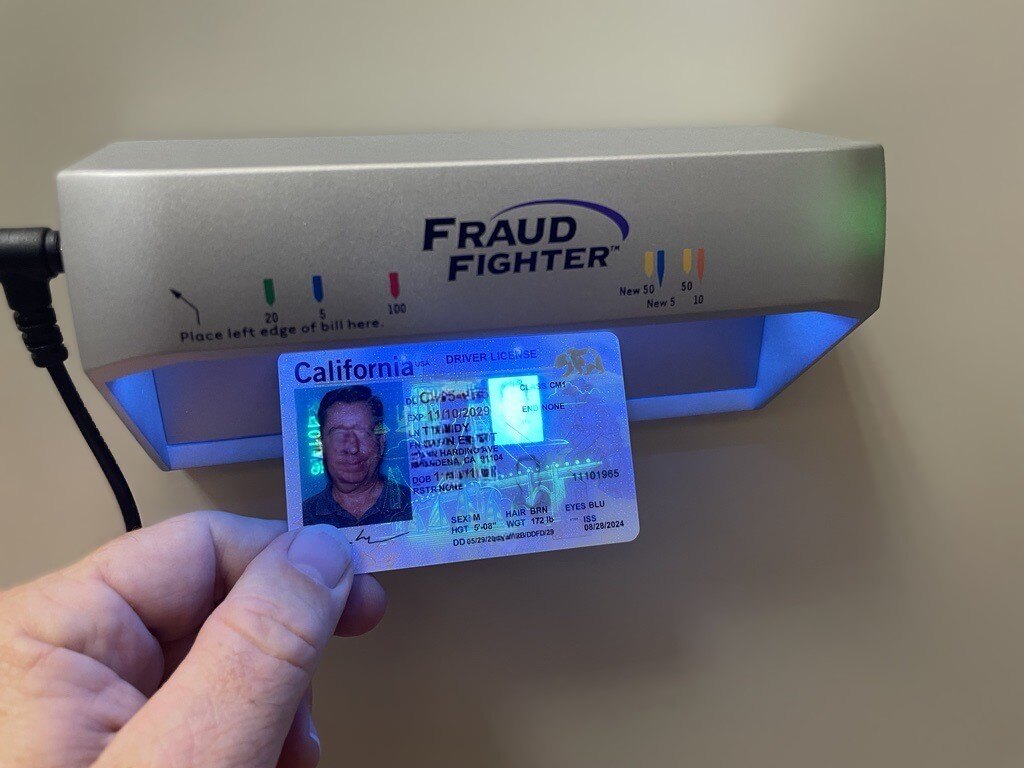
FraudFighter™ counterfeit detector systems use UV-reactive inks, magnetic ink, infrared signatures, and intaglio printing on checks to verify currency authenticity. An automatic counterfeit bill detector can verify a note in under three seconds, and FraudFighter™ has more than 25,000 units installed. The company has 25 years in counterfeit detection, with units deployed across retail stores, banks, casinos, government agencies, and rental counters. The same UV and magnetic checks apply to money orders, traveler’s checks, and altered business checks.
|
Detection method |
What it verifies |
Where it fits |
|
UV-reactive ink check |
Security fibers and planchettes that fluoresce under ultraviolet light |
Currency, money orders, traveler’s checks |
|
Magnetic ink detection |
Magnetic properties present in genuine currency ink |
Currency at high-volume cash counters |
|
Infrared signature check |
IR-absorbing and IR-reflecting areas of a genuine note |
Automatic counterfeit money detection units |
|
Intaglio print check |
Raised texture from engraved plate printing |
Manual checks and staff training |
|
Bill counting with detection |
Note count and authenticity in one pass |
Reconciliation and large cash-outs |
ID Authentication Systems Strengthen Document Verification
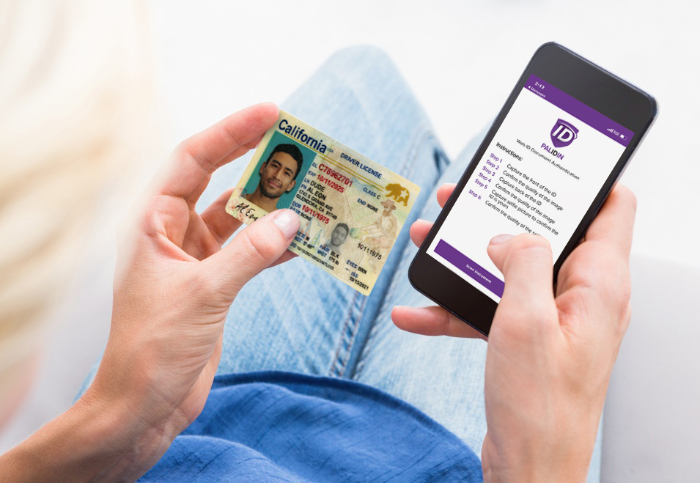
Desktop, mobile, and portal-based ID verification options cover different transaction environments. FraudFighter™ holds SOC 2 Type II compliance for its identity authentication systems, which covers data security and operational controls. United States-based support with a one-business-day response commitment helps organizations maintain uptime without pausing the counter.
|
Deployment |
Fits |
Typical use |
|
Desktop ID scanner |
Fixed counters and teller windows |
Check cashing and branch account opening |
|
Mobile ID authentication |
Staff working away from a fixed station |
Field visits and remote signings |
|
Portal-based verification |
Client-not-present transactions |
Mortgage applications and submissions |
Documented Procedures and Escalation Protocols Hold the Process Together
Documented procedures create a repeatable process that reduces reliance on individual judgment. Escalation protocols make sure transactions carrying a red flag reach a trained reviewer before cash is released or an application advances.
Red Flags and Fraud Indicators at the Transaction Point
Frontline employees need clear indicators that trigger escalation to compliance or management. Red flags fall into three groups: document anomalies, transaction patterns, and customer behavior.
Signs of a Fake or Altered Identity Document
Fake or altered IDs often show inconsistencies in font, spacing, color, or lamination when set against a genuine document. Counterfeit documents may lack security features such as holograms, microprinting, or UV-reactive elements. An ID scanner reads the barcode and machine-readable zone and compares the result against the printed data, which catches alterations that survive a visual check.
- Font, spacing, or alignment that differs from a genuine document of the same state and issue year
- Lamination that lifts, bubbles, or shows a cut edge around the photo
- Missing or weak UV-reactive elements, microprinting, or holograms
- Barcode or machine-readable zone data that does not match the printed data
- An expiration date, issue date, or document number outside the issuing state’s format
Employee Response to Suspicious Transaction Patterns
Suspicious transactions include unusual urgency, mismatched borrower documentation, or requests that sit outside the customer’s normal behavior. Structuring across several visits, a third party waiting outside, and reluctance to present a second form of ID belong in the same group. Staff uncertainty should trigger escalation to a supervisor or compliance officer rather than a judgment call at the window.
Escalation Triggers for Compliance and Management
Escalation is required when an employee identifies a red flag such as a questionable ID, an altered check, or a suspicious transaction pattern. It ensures a trained reviewer examines the transaction before funds are released or an application advances.
Training and Standard Operating Procedures Support Consistent Fraud Prevention
Training programs must give non-forensic frontline staff simple pass-or-fail checks and clear escalation rules. Standard operating procedures turn compliance management obligations into daily workflows that also serve audit readiness.
Training for Non-Forensic Frontline Staff
Frontline staff need training on operating the detection tools, recognizing common red flags, and following the escalation path. Training should focus on observable indicators rather than subjective judgment, because tellers and loan processors are not forensic document examiners.
Pass or Fail Checks Improve Decision Consistency
Pass or fail checks remove ambiguity by defining the specific criteria a transaction must meet. Verification rules create a repeatable process that applies the same way across every shift, every employee, and every branch.
Documentation Practices That Support Audit Readiness
Documentation should record the identity documents reviewed, the tools used, any red flags observed, and the decision made. These records support SAR filings, CIP recordkeeping obligations, and internal audit reviews, and they protect the employee by showing the approved procedure was followed.
|
Record field |
Why it matters |
|
Document type and issuing state |
Shows which authentication rules applied |
|
Authentication result and timestamp |
Evidence the check ran before funds moved |
|
Tool or device used |
Ties the result to a verifiable system rather than an opinion |
|
Red flags observed |
Supports the SAR narrative and the 30-day filing window |
|
Decision and approver |
Shows the escalation path was followed |
Check Cashing and Mortgage Lending Environments Shape Different Prevention Strategies
Different transaction environments create different fraud risks and operational constraints. ID authentication strategies have to match the speed, volume, and regulatory context of each setting rather than being applied as one template.
Operational Challenges at Check Cashing Counters
The FBI IC3 lists 21,403 identity theft complaints and 12,876 credit card and check fraud complaints in 2024. Check cashing counters carry risk from counterfeit checks, altered checks, and counterfeit currency in high-volume transactions where the customer is waiting and the cash leaves the drawer immediately.
Document and Identity Risk Across the Mortgage Process
The FBI IC3 lists 9,359 real estate complaints in 2024, which reflects fraud risk across the mortgage and real estate environment. Mortgage lending requires identity verification, income documentation review, and credit file validation at several stages, so one unverified identity can travel through weeks of processing before anyone catches it. Financial institutions running both retail and lending operations need controls that carry across the two.
Adapting Prevention Tools Across Both Settings
Counterfeit currency detection tools serve cash-handling environments, while ID verification systems serve both check cashing and mortgage lending. Both settings gain from documented procedures, escalation protocols, and audit-ready records in a shared record format.
|
Factor |
Check cashing counter |
Mortgage lending |
|
Transaction speed |
Seconds to minutes, customer waiting |
Days to weeks across several stages |
|
Primary instrument risk |
Counterfeit currency, altered or counterfeit checks |
Altered income and asset documents |
|
Identity risk point |
A single presentation at the window |
Application, underwriting, and closing |
|
Loss timing |
Immediate, cash leaves the drawer |
Delayed, discovered after funding |
|
Fitting control |
Counterfeit detector plus desktop ID authentication |
Portal-based verification plus document review |
Practical Steps for Compliance and Counterfeit and ID Risk Mitigation
Practical fraud prevention folds verification tools, documented procedures, and suspicious activity reporting into one workflow. A compliance-focused checklist makes sure teams complete each step in the same order every time.
A Compliance-Focused Verification Checklist
The checklist should verify the person, verify the document, and verify the instrument, then record the decision and escalate exceptions to trained personnel.
|
Step |
Check |
Record |
|
1. Verify the person |
ID authentication result and facial comparison against the document photo |
Scan result and timestamp |
|
2. Verify the document |
Security features, barcode and printed data match, expiration date |
Document type, issuing state, pass or fail |
|
3. Verify the instrument |
Counterfeit money detection or check authentication, amount and payee |
Device result |
|
4. Compare the behavior |
Transaction pattern against customer history and location norms |
Pattern flag note |
|
5. Record and decide |
Approve, refuse, or escalate under the written procedure |
Decision, employee, and approver |
|
6. Escalate exceptions |
Route red flags to compliance before funds move |
Escalation time and reviewer |
Documented Procedures Aligned With Regulatory Expectations
Documented procedures should review identity, inspect documents and security features, and compare transaction behavior, then document exceptions and escalate red flags under BSA, CIP, and Red Flags obligations. Pairing the procedure with a named device, such as a counterfeit bill detector at each cash station, removes any question about what employees were supposed to use.
Suspicious Activity Reporting in Risk Management
Suspicious activity reporting creates a record of flagged transactions and supports regulatory compliance. SAR filings also help an organization spot patterns and adjust procedures before a similar attempt succeeds, which turns a reporting duty into an input for fraud prevention solutions.
Integrating Document and ID Fraud Controls for High-Volume Check Cashing and Mortgage Lending Locations
High-volume check cashing and mortgage lending locations have to balance speed with accuracy, using documented procedures and detection tools to prevent counterfeit and identity fraud. The Bank Secrecy Act, the Customer Identification Program, and the Red Flags Rule set the foundation for written programs, but frontline success depends on repeatable verification steps and clear escalation rules.
FraudFighter™ provides counterfeit currency detection and ID verification for business solutions that help organizations build consistent, audit-ready fraud prevention workflows. With more than 25,000 units installed and 25 years of fraud prevention expertise, FraudFighter™ supports high-volume locations in protecting against career-damaging fraud incidents while meeting their compliance obligations.
Talk With FraudFighter™ About Your Front-Counter Fraud Controls
If your counter still relies on an employee’s eyesight, FraudFighter™ can show you what a documented check looks like in practice. Our specialists review your transaction volume, the instruments you handle, and your BSA, CIP, and Red Flags obligations, then match them to counterfeit detection and identity authentication staff can run in seconds.
Call 800-883-8822 to speak with a specialist, or request a quote and our United States-based team will respond within one business day. You can also see why organizations choose FraudFighter™ before you commit to anything.
Frequently Asked Questions
Q1. What is the SAR reporting threshold for a check cashing business?
A. Money services businesses, which include most check cashing operations, must report suspicious transactions involving or aggregating at least $2,000. A separate threshold of at least $5,000 applies to the review of clearance or similar records for money orders and traveler’s checks. Each SAR must be filed no later than 30 calendar days after the initial detection of the facts that may form a basis for filing.
Q2. How does an ID scanner differ from visually checking a driver’s license?
A. A visual check relies on what an employee can see and remember about thousands of valid document designs. An ID scanner reads the barcode and machine-readable zone, compares that data against the printed information, and returns a pass or fail result. It also captures a timestamped record of the check.
Q3. What counts as a red flag under the FTC Red Flags Rule at the point of sale?
A. An identification document that does not look genuine is named as a red flag when a customer presents it. Other common flags include information on the ID that conflicts with what the customer states, documents that appear altered or reassembled, and a photo that does not match the person. Once a business names fake IDs as a red flag in its written program, it must maintain procedures to detect possible fake, forged, or altered identification.
Q4. How fast can automatic counterfeit currency detection run at a busy counter?
A. An automatic counterfeit detector can verify a note in under three seconds, which keeps the check within normal transaction time. The unit reads UV-reactive inks, magnetic ink, and infrared signatures rather than relying on a visual or pen test. At high-volume sites, detection is often combined with bill counting.
Q5. What records should a high-volume location keep for each verified transaction?
A. Record the document type and issuing state, the authentication result with a timestamp, the device used, any red flags observed, and the decision with the approver named. These fields support CIP recordkeeping, SAR narratives, and internal audits without additional reconstruction.