

 10 minute read
Casino Year-End Title 31 Audit Prep: ID Documentation That Passes Examiner Review
Casino year-end Title 31 audit prep puts identification records under direct scrutiny. Examiners test whether those records support the reports the property already filed, so Currency Transaction Reports, aggregation logic, and Suspicious Activity Reports all rest on proving which person was identified and how. A working Title 31 casino compliance program captures accurate identity data before a reportable transaction concludes, not after.
Below, you’ll find what a year-end ID documentation audit should cover across cage operations, table games, slots, credit departments, and front-money systems: the federal rules that govern verification and recording, how aggregation exposure builds when records disagree, where ID gaps feed suspicious activity decisions, and a sampling checklist to run before independent testing. Examiners can request any record inside the retention window, and casinos that standardize identity authentication workflows cut transcription errors and build compliance and risk mitigation evidence files that hold up under review.
Key Takeaways
- Casino year-end Title 31 audit prep starts with verified identity records that support CTR filing and aggregation across every department during each gaming day.
- Federal regulations name the acceptable ID documents and the verification steps casinos must complete before concluding reportable transactions over $10,000.
- SAR review begins at $5,000 in aggregate value and needs supporting identity documentation even when CTR thresholds are not met.
- Deposit, account, and credit records must carry a verified name, permanent address, and SSN, with retrieval that the compliance team can demonstrate on request.
- Year-end checklists should sample CTRs, aggregation logic, ID exception logs, and retention compliance before independent testing begins.
Casino Year-End Title 31 Audit Prep Starts With Core Federal Requirements
Title 31 of the Bank Secrecy Act sets casino-specific obligations under 31 CFR Part 1021. The rules call for written internal controls, independent testing, personnel training, and risk-based procedures for customer due diligence. Casinos must capture customer-identifying information before a reportable transaction concludes and hold records examiners can retrieve within statutory timelines.
Currency Transaction Reports and Suspicious Activity Reports carry most of the Title 31 reporting load for casinos and card clubs nationwide.
AML Program Controls Every Casino Must Implement
Every casino must write and run an anti-money laundering program that assures and monitors Bank Secrecy Act compliance. Required elements include internal controls, independent testing scaled to money-laundering risk, staff training, and a designated compliance officer. Customer due diligence procedures sit alongside them, and all of it depends on the same customer identification data feeding recordkeeping, reporting, aggregation, and testing.
Currency Transaction Report Triggers and Cash-In, Cash-Out Categories
Casinos file a Currency Transaction Report for each transaction in currency involving cash-in or cash-out of more than $10,000 during a gaming day. The regulation lists the qualifying activity in two directions.
|
Transaction Direction |
Activity Counted Toward the $10,000 Gaming-Day Test |
|---|---|
|
Cash-in |
Chip purchases, front-money deposits, safekeeping deposits, credit payments including markers and counter checks, currency bets, wire transfers, casino check purchases, currency exchanges, and bills inserted into electronic gaming devices. |
|
Cash-out |
Chip and ticket redemptions, front-money withdrawals, safekeeping withdrawals, credit advances, bet payments, wire-transfer receipts, check cashing, currency exchanges, travel and complimentary expenses, gaming incentives, tournament wins, and bills paid from electronic gaming devices. |
The aggregation rule treats multiple currency transactions as one when the casino knows they are by or on behalf of the same person and together exceed $10,000 in a gaming day.
Suspicious Activity Report Thresholds and Filing Deadlines
A Suspicious Activity Report is required when a casino knows, suspects, or has reason to suspect that a transaction involves illegal-source funds, is structured to evade Bank Secrecy Act requirements, has no apparent lawful purpose, or uses the casino to facilitate crime. The threshold applies at $5,000 in involved or aggregated value, and filing is due within 30 calendar days after initial detection.
Identity-related indicators include refusal to provide ID, altered documents, third-party involvement, repeated near-threshold activity, and mismatched names. Strong ID authentication records support SAR decision files even when no CTR is triggered.
Casino Year-End Title 31 Audit Prep Depends on Complete ID Documentation
Identification records are the proof behind CTR filing, aggregation logic, and SAR decisioning. Federal regulations require casinos to verify and record the name and address of the individual presenting a transaction, and to record the identity, account number, and Social Security Number or Taxpayer Identification Number of the person on whose behalf it is effected. Without those fields, the property cannot show it applied the aggregation rules correctly.
Examiners test whether records across cage, table games, slots, credit, front money, safekeeping, and wire-transfer systems point to the same person on the same gaming day. Inconsistent records create audit exposure.
ID Verification Supports CTR and SAR Reporting
The person presenting the transaction is whoever physically conducts it, verified and recorded before it concludes. The person on whose behalf it is effected is the party benefiting, and the casino records that identity, account number, and SSN or TIN where one exists. Capturing both keeps CTRs complete and lets aggregation link related activity.
Internal Controls and Training Rely on Accurate Identity Records
Weak identity capture undermines several AML program elements at once: recordkeeping, CTR filing, SAR escalation, aggregation, training, and independent testing. Internal controls depend on procedures employees repeat across every department and shift. Year-end preparation should review training notes and ID exception logs to find recurring gaps that call for additional staff education.
ID Verification Rules That Apply Before Reportable Transactions
Federal regulations name the identity documents casinos must examine and the customer information they must record before concluding a transaction that triggers CTR filing. The standard differs for aliens and non-U.S. residents compared with other patrons, and a separate rule governs deposits, accounts, and credit lines. In every case, the casino verifies and records the name and address of the individual presenting the transaction before it concludes.
Identity Documents Accepted Under Federal Regulations
The table below summarizes what the regulation accepts.
|
Patron or Record Type |
Acceptable Identification |
Recording Requirement |
|---|---|---|
|
Aliens and non-U.S. residents |
Passport, alien identification card, or other official document evidencing nationality or residence, such as a provincial driver’s license showing a home address. |
Record available identifying fields and log any that the document does not carry. |
|
All other patrons |
A document normally acceptable in banking for cashing checks for nondepositors, such as a driver’s license or credit card. |
Verify and record name and address before the transaction concludes. |
|
Deposits, accounts, and credit lines |
A document type described in 31 CFR 1010.312, examined at the time the deposit is made, the account is opened, or credit is extended. |
Secure name, permanent address, and Social Security Number. |
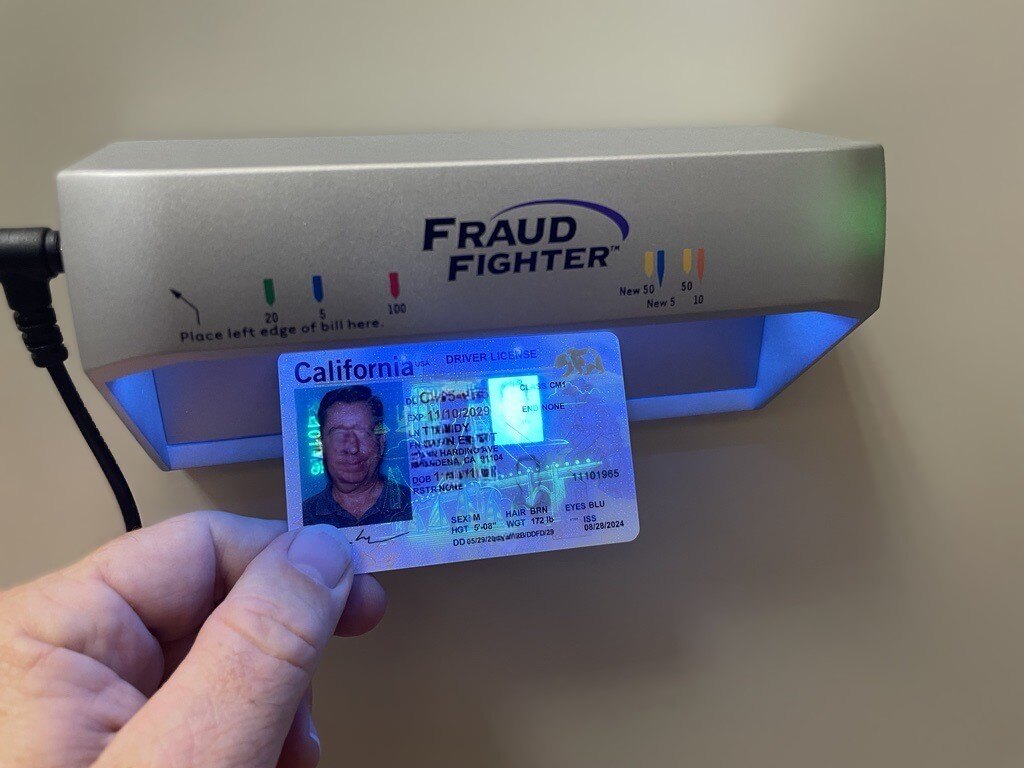
Most casino programs go further and require government-issued photo identification. FraudFighter ID scanners read the security features in those documents so verification follows the same steps at every station. Confirm the property’s policy matches both the federal standard and its own risk-based procedures.
Recording and Retaining Customer Identification Information
Recording duties run alongside verification. The casino records the identity, account number, and SSN or TIN, if any, of the person or entity on whose behalf a transaction is effected, and retains Chapter X records for five years. Where an SSN cannot be secured, the property is not deemed in violation if it made a reasonable effort and keeps a list of names and addresses of the persons involved.
Verification Steps for Non-U.S. Residents and Aliens
Foreign documents may not carry every field a U.S. driver’s license shows, so casinos need clear procedures for recording partial identifying information. Year-end preparation should sample transactions involving non-U.S. residents and confirm exception logs record what could not be captured and the reasonable effort made to secure it.
Aggregation Rules Shape Title 31 ID Documentation Review
Aggregation rules treat multiple currency transactions as one when the casino knows they are by or on behalf of the same person and together exceed $10,000 during a gaming day. A single patron may pass through cage cashiers, table games, slots, credit, check cashing, front money, safekeeping, wires, and promotions in that time, and each stop is a chance for the identity record to drift.
Aggregation Across Multiple Gaming Departments
Departments that can trigger CTR requirements, and the aggregation risk each one carries, break down as follows.
|
Department or System |
Typical Currency Activity |
Aggregation Risk When ID Records Differ |
|---|---|---|
|
Cage cashiers |
Chip redemptions, currency exchanges, check cashing |
Highest transaction volume, so most same-person matches originate here |
|
Table games |
Currency buy-ins and bet payments |
Pit records often capture a name without supporting identifiers |
|
Slots and electronic gaming devices |
Bills in, tickets and bills out |
Player-club data may not match the name on the ID presented at the cage |
|
Credit and markers |
Marker issuance, credit advances, and payments |
Credit files hold an SSN that cage records may lack |
|
Front money and safekeeping |
Deposits and withdrawals |
Account name can differ from the identification presented |
|
Wires and promotions |
Transfers, tournament wins, and gaming incentives |
Third-party involvement can obscure who actually benefits |
Proving Knowledge of Same-Person Transactions
A casino is deemed to know about same-person transactions when an owner, officer, director, or employee acting within the scope of employment holds that knowledge, or when it appears in books, records, logs, or systems the casino maintains. A centralized reporting portal that standardizes capture across touchpoints produces the consistent records that evidence it.
Consistent ID Records Protect Aggregation Accuracy
Incomplete records make aggregation logic harder to defend. A patron who gives slightly different names or addresses at different windows may never be matched, and missing SSNs, partial addresses, and transcription errors are the usual causes. Set a written procedure for resolving discrepancies when one patron appears under variant spellings across systems.
ID Documentation Gaps Shape Suspicious Activity Reporting
SAR obligations begin when a casino knows, suspects, or has reason to suspect that a transaction involves unlawful activity or has no apparent lawful purpose. Identity documentation gaps often supply the indicators, and recording those red flags in escalation notes gives compliance officers the full picture when they judge whether the criteria are satisfied.
ID-Related Issues That Trigger SAR Considerations
Patrons who refuse identification during a reportable transaction, or who present documents that appear altered or counterfeit, create indicators worth documenting on the spot. Year-end checklists should review ID exception logs for missing SSNs, unreadable or expired documents, foreign documents, address mismatches, refusals, and third-party involvement, with the reasonable effort and analysis recorded for each entry.
Handling ID Refusals and Document Irregularities
Staff should escalate identity concerns to a compliance officer rather than deciding at the window. Counterfeit detectors and identity authentication tools help them spot altered documents during verification, and year-end preparation should review how refusals were logged, escalated, and resolved.
Procedures That Support Risk-Based SAR Decisioning
Risk-based SAR decisioning weighs identity behavior, transaction patterns, customer relationships, and external risk factors together. Year-end checklists should reconcile identification records against escalation notes where identity behavior formed part of the analysis, and independent testing should confirm the procedures were applied the same way across departments.
Year-End ID Documentation Checklist for Casino Compliance Teams
A year-end ID documentation checklist samples CTRs, SAR files, deposit and credit records, ID exception logs, SSN exception lists, and retention compliance, alongside Customer Identification Program expectations. Working through it by audit area keeps the sampling defensible.
|
Audit Area |
What to Sample |
Evidence Examiners Expect |
|---|---|---|
|
CTR files |
Filed CTRs drawn from every currency-handling department |
Verified name and address for the person presenting, plus identity, account number, and SSN or TIN for the beneficiary |
|
Aggregation logic |
One full gaming day of multi-department activity |
Records that link the same patron across cage, pit, slots, credit, and front money |
|
SAR files |
Escalations where identity behavior formed part of the analysis |
Documented refusals, irregular documents, and third-party activity |
|
ID exception logs |
Missing SSNs, unreadable or expired documents, address mismatches |
Reasonable-effort notes and a recorded resolution for each entry |
|
Deposits, accounts, credit |
Front money, safekeeping accounts, and credit line openings |
Name, permanent address, and SSN verified at the time of the event |
|
Retention and retrieval |
Timed retrieval tests against five-year records |
Records produced inside the retention window, plus a current SSN exception list |
Sampling CTRs and SAR Files for ID Compliance
Pull filed CTRs from every department that handles currency, not just the cage, and confirm each file carries name and address verification plus identifying information for both the person presenting and the person on whose behalf the transaction was effected. Review SAR files the same way, then complete remediation before independent testing begins.
Records Required for Deposits, Accounts, and Credit Lines
Federal regulations require casinos to secure and maintain the name, permanent address, and Social Security Number for each deposit of funds, account opened, or line of credit extended, verified at the time by a document type described in 31 CFR 1010.312. Sample front money, safekeeping accounts, and credit lines to confirm those fields were captured.
Record Retention and Retrieval Testing
Test retrieval directly. Chapter X records must be kept for five years, so the compliance team should produce any sampled identification or transaction record within that window without an extended search. Confirm the SSN exception list is current at the same time.
ID Authentication Tools Strengthen Title 31 Audit Readiness
Identity authentication tools standardize customer identification across departments and create the consistent evidence files that support CTR filing, aggregation, and SAR decisioning. Automated capture reduces transcription errors and writes audit logs showing when a document was examined and what was recorded.
Security Features FraudFighter™ Scanners Detect in IDs
Scanners read UV printing, microtext, holograms, barcodes, and machine-readable zones on government-issued documents. Driver’s license guides help staff learn which features appear on which document types, while automated tools show the same standard was applied on every shift.
Standardized ID Capture Reduces Recording Errors
Technology-enabled workflows pull name, address, date of birth, document number, and expiration date from machine-readable zones and barcodes, which removes most manual transcription errors. The same fields get recorded regardless of which employee runs the transaction, and the resulting audit logs give examiners a clear verification record.
Limitations and Compliance Considerations of ID Scanners
Scanning an ID does not satisfy Title 31 on its own. The regulation requires verification, recording, retention, and an AML program behind it, and federal obligations attach to reportable transactions rather than every transaction on the floor. State gaming regulators may add identification, excluded-person, age-verification, and record-retention rules beyond the federal baseline.
Casino Year-End Title 31 Audit Prep: Ensuring ID Documentation Meets Examiner Standards
Year-end Title 31 preparation comes down to showing that identification records support CTR filing, aggregation logic, SAR decisioning, and record retrieval across every department. A checklist that samples CTRs, SAR files, deposit and credit records, ID exception logs, and retention compliance confirms the procedures were followed the same way everywhere.
FraudFighter™ helps casino operations teams prevent counterfeit losses, meet regulatory obligations, and standardize fraud prevention across properties with minimal training time.
Prepare for Title 31 Examiner Review With FraudFighter™
Year-end review goes better when identity records already agree with each other. FraudFighter™ has built point-of-sale verification tools since 2000, with more than 25,000 units installed and SOC 2 Type II compliance. Our specialists work with casino compliance and cage operations teams to standardize ID capture so the evidence file holds together when an examiner pulls a gaming day.
Call 888.664.9214 in the US or 626.225.0203 internationally, Monday through Friday, 7:00 a.m. to 5:00 p.m. Pacific. You can also contact FraudFighter™ and request more information for a quote and a review of your current identity authentication workflow before independent testing begins.
Frequently Asked Questions
Q1. How long must casinos retain Title 31 identification records?
A. Records required by Chapter X of the Bank Secrecy Act must be kept for five years. That window covers identification records tied to CTR filings, SAR files, deposits, accounts, and credit lines. Year-end testing should confirm the team can retrieve any sampled record inside that period, because examiners ask for specific files during review.
Q2. Does scanning a driver’s license satisfy Title 31 compliance?
A. No. Scanning captures data, but Title 31 also requires verification, recording, retention, and a written anti-money laundering program with internal controls, independent testing, training, and a designated compliance officer. A scanner supports those duties by standardizing capture and producing audit logs. Compliance rests on the program around the device, not the device by itself.
Q3. What happens when a patron will not provide a Social Security Number?
A. The casino is not deemed in violation where it made a reasonable effort and keeps a list of names and addresses of persons from whom SSNs could not be obtained. Examiners request that list during year-end review. Staff should log the effort at the time of the transaction rather than reconstructing it later, and repeated refusals may feed suspicious activity analysis.
Q4. Which casino departments create CTR aggregation exposure?
A. Cage cashiers, table games, slots and electronic gaming devices, credit, check cashing, front money, safekeeping, wires, and promotions can all generate reportable currency activity. Aggregation applies when the casino knows transactions are by or on behalf of the same person and exceed $10,000 during a gaming day. Consistent identity records across those systems are what prove the logic worked.
Q5. How do ID documentation gaps affect SAR decisions?
A. Identity behavior often forms part of the suspicion analysis. Refusal to provide identification, altered documents, mismatched names, third-party involvement, and repeated near-threshold activity are all documented indicators. SAR obligations begin at $5,000 in aggregate value and require filing within 30 calendar days after initial detection.