


 9 minute read
Bar and Nightclub Late-Summer ID Audit: Documentation Practices That Reduce Liability
Key Takeaways
- Digital audit trails with timestamped, searchable records replace manual logs at 58% of nightlife venues
- Collecting minimum necessary ID data reduces CCPA biometric violation costs of USD 2,500–7,500 per incident
- Mandatory Alcohol Server Training (MAST) is required in 12–24 states and must be tracked with renewal dates
- Preserved verification evidence supports legal defense when alcohol service violations cost USD 1,000–10,000 per incident
- Internal audits and mock inspections ensure documentation practices pass real regulatory reviews
A late-summer ID audit prepares age verification documentation before the fall nightlife rush tests every control. Regulators, plaintiffs' attorneys, and insurers evaluate liability based on what can be proven, not what was intended. The difference between a defensible ID verification record and a compliance failure is documentation discipline applied consistently across every shift and location.
This guide targets bar and nightclub owners, general managers, and compliance leads responsible for maintaining verification standards. The core principle is simple: liability drops when every ID verification is documented, scan log records are retained on a defined schedule, and only the minimum necessary data is collected. Below, you’ll find the eight practices that reduce exposure, the audit preparation sequence, a technology and cost reference, the regulatory context, and the liability evidence behind each one.
Part 1: The Documentation Practices That Reduce Liability
Adopt these as standing practices, then confirm each one during the late-summer audit.
Practice 1: Keep a Digital Audit Trail, Not Manual Logs
Manual logs create gaps that fail under inspection pressure. Digital audit trails used by bars and nightclubs have replaced manual systems at 58% of nightlife venues, while 42% still rely on paper records that lack timestamps and search capability. A scan log written by ID scanning software captures every check as it happens, so the record does not depend on a door host remembering to write it down.
An effective ID reader for bars must structure logs so they are timestamped, searchable, and exportable for regulatory review. Pairing entry counts with a visitor management record gives you one view of who came through the door and when. Compliance and audit toolsets must cover ongoing monitoring, audit trails, and document retention to satisfy inspection requirements.
Practice 2: Set a Records Retention Schedule and Follow It
Retention discipline protects against over-collection liability and ensures proof is available when needed. Define how long each record type is kept, then set that schedule inside your ID management system so it applies consistently across all verification activities. Records must remain accessible for the required retention period after the relationship ends, typically within a 5–7-year window.
Establish an ongoing monitoring schedule so retention is reviewed rather than left to chance. Regular reviews prevent the accumulation of expired records that increase privacy exposure.
Practice 3: Collect the Minimum ID Data Necessary
Over-collecting ID data increases liability without improving verification accuracy. Capture only what the Customer Identification Program check requires, avoiding full images of ID credentials that increase privacy exposure. Age verification at the door needs a date of birth and a pass or fail result, not a stored copy of the entire license. Biometric data carries a high-risk classification under GDPR and CCPA, with CCPA biometric violations costing USD 2,500–7,500 per incident.
Factor in the breach history of face recognition and fingerprint databases when deciding what to store. Optical character recognition reads the printed fields on a license and lets you discard the image afterward, which keeps the check accurate without holding data you never needed. The ID authentication scanner configuration should eliminate unnecessary data fields to minimize regulatory risk.
Practice 4: Standardize Incident Reports for Inspection
Use one standard incident report format across all shifts and locations, from the front desk to the floor. Capture the same fields every time so reports are ready for regulatory review without reformatting or supplemental documentation.
Consistency ensures that inspection-ready records exist regardless of which staff member handled the incident. Standardized reporting reduces the training burden and eliminates format variation that raises questions during audits.
Practice 5: Document Staff Training and Renewals
Maintain training records for all staff who serve alcohol. Track Mandatory Alcohol Server Training (MAST), which is required in 12–24 states and must be renewed on a defined schedule.
Log completion and renewal dates so no certification lapses unnoticed. Training documentation proves that staff were equipped to make correct verification decisions. Fraud prevention resources such as webinars and compliance guides keep door staff current between renewals.
Practice 6: Preserve Verification Evidence for Legal Defense
Preserve evidence of verification for each relevant transaction. A scan log entry showing the time, the operator, and the fake ID detection result is the first record an attorney or examiner will ask to see. Keep regulatory response materials assembled and current so they can be produced immediately when requested.
Retain the records that support a legal defense if a violation is alleged. Verification evidence shifts the burden when alcohol service violations cost USD 1,000–10,000 per incident.
Practice 7: Control Access and Automate Monitoring
Establish access controls so only authorized staff can view or edit verification records. Access management solutions assign permissions by role, which keeps door staff from editing the records that document their own shifts. Configure automated monitoring and alert thresholds to flag exceptions in real time.
Automated monitoring removes the reliance on manual review that fails under high transaction volumes. Access controls prevent unauthorized record modification that undermines audit integrity.
Practice 8: Run Internal Audits and Mock Inspections
Conduct internal audits on a sample of transactions. Document all verification procedures so the process is repeatable and reviewable by third parties. Where third-party tools sit in the workflow, record what data they touch and what they retain, because an examiner will treat their data handling as yours.
Use mock inspections to test whether staff and records would pass a real regulatory review. Mock inspections reveal gaps before they become compliance violations.
Part 2: Late-Summer Audit Preparation Sequence
Stage the prep work so documentation is inspection-ready before the fall and holiday nightlife rush.
Implementation Controls (Weeks 7–16)
Establish access controls and configure automated monitoring and alert thresholds. Access controls prevent unauthorized record changes, while automated monitoring flags verification exceptions in real time. Both controls must be tested under production transaction volumes to confirm they function correctly during peak hours.
Implementation requires coordination between identity authentication systems and staff workflows. Confirm that the backend system writes each check to the permanent record without a manual step. Controls should not create friction that slows entry during busy shifts.
Audit Preparation (Weeks 17–20)
Document all verification procedures and preserve evidence of verification. Conduct an internal audit of sample transactions, prepare regulatory response materials, and establish an ongoing monitoring schedule. Audit preparation consolidates documentation into a format that satisfies regulatory inspection requirements.
The preparation phase tests whether records can be retrieved and reviewed efficiently. Gaps identified during this phase should be corrected before the fall nightlife season begins.
Part 3: Verification Technology Reference
ID Scanners and Biometric Tools
Industry data shows where nightlife venues currently stand on verification technology. The price of a scanning device varies with capability, from around USD 200 for basic units to USD 600 for advanced models.
|
Verification Method |
Adoption at Bars and Nightclubs |
|
ID barcode scanning software |
89% |
|
Visual inspection of physical ID cards |
78% |
|
ID scanners |
71% |
|
Facial recognition systems |
18% |
Biometric verification methods include facial recognition, fingerprint scanning, iris/retinal scanning, and behavioral biometrics. Each method carries different privacy obligations and cost structures that affect deployment decisions. Digital ID cards held in a phone wallet are now common enough that venues need mobile ID scanning alongside the reader at the door.
Hardware, Software, and Per-Transaction Costs
Budget hardware once and transactions on an ongoing basis. Current market pricing for each component breaks down as follows.
|
Component |
Pricing |
|
ID scanner (scanning device) |
USD 200–600 per unit |
|
Complete nightlife ID scanner package |
USD 795 one-time |
|
Fingerprint scanner |
USD 15–40 per unit |
|
Face recognition camera |
USD 20–80 per unit |
|
Biometric verification |
USD 0.50–2.50 per transaction |
|
Document authentication |
USD 1.00–3.50 per transaction |
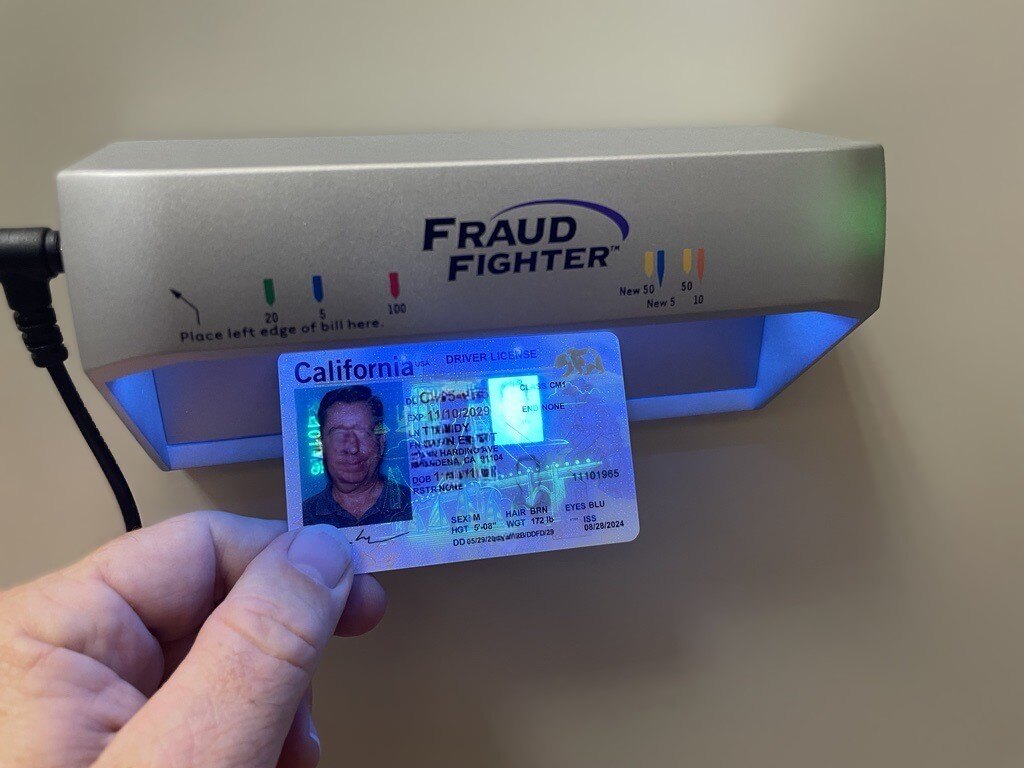
The FraudFighter ID Scanner combines hardware and software in a package designed for high-volume nightlife environments. Cost per scan drops significantly at higher transaction volumes, making per-unit economics favorable for busy venues.
Cloud Vs. On-Premises Deployment
Cloud-based solutions represent 65.12% of deployments across the identity verification market. The deployment model sets how fast you go live, how much you pay up front, and how much control you keep over where records sit.
|
Factor |
On-Premises |
Hybrid |
Cloud |
|
Data residency control |
Full |
Configurable |
Limited |
|
Time to deployment |
3–6 months |
4–8 weeks |
2–4 weeks |
|
Initial capital cost |
USD 100K–500K+ |
USD 50K–150K |
USD 0–50K |
Cloud SLA availability reaches 99.9%–99.99%, with document verification latency between 1 and 5 seconds. Initial capital cost runs high for on-premises (USD 100K–500K+), medium for hybrid (USD 50K–150K), and low for cloud (USD 0–50K).
Part 4: Consumer and Regulatory Context
Regulatory Requirements and Fines
Three exposures account for most regulatory risk at nightlife venues. Each is measured per incident, and each shrinks when you can produce documentation on request.
|
Requirement |
Exposure or Obligation |
|
Alcohol service violations |
USD 1,000–10,000 per incident |
|
Mandatory Alcohol Server Training (MAST) |
Required in 12–24 states; documented for all serving staff |
|
CCPA biometric violations |
USD 2,500–7,500 per violation |
ID authentication standards vary by jurisdiction, requiring venue operators to verify requirements in each location. The ID solutions you deploy must align with state and local mandates to avoid regulatory penalties.
Consumer Verification Priorities
Market surveys rank what consumers care about when their identity gets verified.
|
Priority When Verifying Identity |
Share of Consumers |
|
Security |
84% |
|
Ease of use |
75% |
|
Privacy |
58% |
|
Fast verification |
47% |
|
Accessibility |
37% |
These priorities shape adoption patterns for verification technology. Systems that balance security with ease of use achieve higher staff adoption and fewer operational bottlenecks. Common questions about how a scan works in practice surface during rollout more often than pricing questions do.
Generational Comfort With Facial Recognition
Comfort with face recognition varies by age group, an 18 percentage point spread between the youngest and oldest patrons.
|
Generation |
Comfort With Face Recognition |
|
Gen Z |
72% |
|
Millennials |
68% |
|
Gen X |
61% |
|
Baby Boomers |
54% |
Generational differences influence technology choices for venues serving different age demographics. Younger patrons accept biometric verification more readily than older guests.
Part 5: Liability Impact Evidence
Nightclub Case Study
A venue conducting 50,000 ID scans detected 12 fake IDs and prevented 3 underage sales. The documented verification process supported a 5% insurance premium reduction after improved compliance. Each prevented underage sale eliminated potential fines of USD 1,000–10,000, demonstrating measurable ROI.
The case illustrates how documented verification reduces both direct fines and insurance costs. Preserved evidence shifts the burden when allegations arise.
Liability Scenarios Documentation Mitigates
Alcohol service violations (USD 1,000–10,000 per incident) require proof of a good-faith verification attempt. Underage-service claims rely on the scan log and preserved evidence to support a defense. Privacy exposure from over-collection or full ID image storage creates liability that proper data minimization eliminates.
Counterfeit detection systems paired with documentation practices provide the strongest defense against allegations. The combination of technology and process discipline reduces both financial and reputational risk.
Integrating Documentation Practices to Reduce Liability
Confirm that each of the eight practices is in place and evidenced during the late-summer audit. Prioritize the practices that cut the largest exposures: minimum data collection, retention discipline, and preserved verification evidence. Standardize documentation across every shift and location so the network is consistent.
Feed audit findings into the next monitoring cycle so readiness holds year-round. FraudFighter has supported compliance programs at bars, nightclubs, and hospitality businesses for over two decades, providing the tools and processes that hold up under regulatory inspection.
Late-summer audits prepare documentation so verification standards remain defensible when regulators, attorneys, or insurers request proof.
Get Your ID Verification Records Audit-Ready With FraudFighter
Late summer is the window to close documentation gaps before the fall rush makes them expensive. FraudFighter has protected bars, nightclubs, and hospitality operators from our Southern California base since 2000, with more than 25,000 units deployed and SOC 2 Type II certification behind the data we handle. Our age verification and fake ID detection tools produce the timestamped scan log, retention controls, and exportable evidence that regulators, insurers, and attorneys ask for.
Call our fraud prevention specialists at 1-800-883-8822 in the US, or 1-626-332-3398 internationally, Monday through Friday, 8:00 AM to 5:00 PM Pacific. You can also request a quote online and we will size the setup to your door volume.
To review your audit trail, retention schedule, and scanning setup before the season starts, contact FraudFighter™ and request more information.
Frequently Asked Questions
Q1. How Long Should a Bar or Nightclub Keep ID Scan Records?
Retention periods depend on your state alcohol board and on any privacy statute covering the data you hold. Most venues work to a 5 to 7 year window after the relationship ends, which lines up with the outside limit on many dram shop and alcohol service claims. Set the period once inside your ID management system and let the schedule purge records automatically. Holding records longer than the schedule requires adds privacy exposure without adding legal protection.
Q2. Does Scanning IDs at the Door Create Privacy Liability?
A. Scanning is not the exposure. Storing more than you need is. A door check needs a date of birth and a pass or fail result, not a full image of the license or a biometric template. CCPA biometric violations cost USD 2,500 to 7,500 per violation, so venues that capture face or fingerprint data take on obligations that a plain age verification check never triggers. Configure the scanner to discard whatever the check does not require.
Q3. What Does a Defensible ID Verification Record Contain?
A. A defensible scan log entry records the date, the time, the document type, the pass or fail result, and the operator who ran the check. Records must be timestamped, searchable, and exportable so you can produce them during an inspection without reformatting. Pair the log with incident reports in one standard format and with current staff training certificates. Together, these establish the good-faith verification attempt that alcohol service and underage-service defenses rest on.
Q4. Do Digital ID Cards Need Different Equipment Than Physical ID Cards?
A. Yes. Mobile driver's licenses and digital ID cards held in a phone wallet present data differently from the barcode and printed fields on physical ID cards. A venue running only ID barcode scanning software will either turn away valid credentials or wave them through unverified. Adding mobile ID scanning alongside the reader at the door keeps one process for every patron and one entry in the same scan log. Confirm which mobile credential standards your scanning device supports in your state.
Q5. How Much Does an ID Scanning Setup Cost for One Venue?
A. A scanning device runs USD 200 to 600 per unit, depending on capability, and a complete nightlife package is available at USD 795 one-time. Per-transaction pricing adds USD 1.00 to 3.50 for document authentication and USD 0.50 to 2.50 for biometric verification, with cost per scan dropping as volume rises. Weigh that against alcohol service fines of USD 1,000 to 10,000 per incident. A single prevented underage sale can cover the hardware for a year.