

 10 minute read
Holiday Cash Volume Handling: A Bill Counter Buyer's Guide for End-of-Day Reconciliation
Key Takeaways
- Cash accounts for 14% of consumer payments and is used by 83% of shoppers within 30 days
- Holiday traffic compresses closeout windows and increases variance risk from manual counting errors
- Count-by-weight scales fit mixed cash and coin drawers while hi-speed bill counters suit tall note stacks
- Counterfeit detection capability should align with authentication needs at checkout versus back office
- Device selection should match register count, peak drawer value, staffing patterns, and data export needs
Holiday cash volume handling gets hardest at the exact point in the year when a store can least afford a slow, uncertain count. Concentrated transaction volume compresses end-of-day reconciliation into shorter, more error-prone windows. Longer lines, temporary staff, and multiple active registers increase the likelihood of counting delays and drawer variances. Choosing the right bill counter or currency scale before peak season helps managers hold closeout speed, counting accuracy, and auditability when operational pressure is highest.
Below, you’ll find a procurement framework built around operational needs rather than device features alone. We cover holiday cash usage patterns, the reconciliation problems peak traffic creates, the device classes that solve each problem, and the measurements to take before you buy cash handling and counting equipment. FraudFighter™ has designed and manufactured counterfeit detection and cash handling products since 2000, and the guidance here reflects the questions retail, banking, and hospitality operators raise most often before peak season.
Holiday Cash Volume Handling Still Matters Because Cash Use Holds Steady
Cash remains a stable payment method despite card and digital growth in retail. The Federal Reserve’s 2025 Diary of Consumer Payment Choice found cash accounted for 14% of consumer payments in 2024. Shoppers made an average of seven cash payments per month for four consecutive years.
Small-value transactions and specific demographic groups drive that consistency.
Cash Usage Varies Across Consumer Segments
Cash was the third-most-used payment instrument in 2024, and 83% of Diary participants used it at least once in the prior 30 days. Consumers reached for cash most often on payments under $25, at five such payments per month.
|
Consumer segment or payment type |
Cash share of payments |
Source period |
|---|---|---|
|
All U.S. consumers |
14% |
2024 |
|
Households earning under $25,000 |
24% |
2024 |
|
Adults 55 and older |
19% |
2024 |
|
Used cash at least once in prior 30 days |
83% of participants |
2025 Diary |
|
Payments under $25 |
5 cash payments per month |
2024 |
Stores serving mixed demographics or lower-price-point merchandise can therefore see higher cash rates than national averages suggest.
Seasonal Factors Increase Cash Handling Pressure
91% of consumers planned to celebrate winter holidays in 2025, according to the National Retail Federation. Average planned holiday spending was $890 for gifts and seasonal items. Black Friday alone drew 80.3 million in-store shoppers, creating peak-day register and cash-room pressure.
Seasonal spikes compress closeout work into shorter windows, exactly when staff fatigue and temporary employees raise variance risk.
Transaction Types That Drive Cash Volume Spikes
Holiday add-ons, impulse buys, food, and small gift items are typical cash use cases, and the Federal Reserve found consumers preferred cash under $25. Mixed-income customer bases see higher cash rates when discretionary budgets tighten.
Stores with extended holiday hours and multiple register stations face concentrated reconciliation workloads, even when cash represents a minority of total tender.
Holiday Cash Volume Handling Creates Distinct End-of-Day Reconciliation Problems
Holiday traffic compresses end-of-day reconciliation into a smaller, more error-prone window. Longer lines, tired staff, temporary employees, and more active drawers turn manual counts into delays and variance investigations.
Bill counters reduce manual counting errors but do not eliminate cash variance from cashier mistakes, returns, voids, theft, or POS issues.
Holiday Traffic Compresses the Reconciliation Window
Extended hours and high transaction volume cut the time available for accurate drawer reconciliation, and more active registers mean more drawers to count before deposits can be prepared. Temporary staff often lack closeout experience, which creates training bottlenecks and recount loops.
Peak nights with 80-plus-million in-store shoppers create pressure to close tills quickly without sacrificing accuracy. Managers need counting workflows that hold up with tired or undertrained staff.
Accuracy Carries the Same Weight as Speed in Closeout
Manual counting during peak periods creates variance risk that triggers time-consuming investigations. Variance can come from cashier mistakes, returns, voids, theft, deposits, or POS issues, not just counting errors. IRS recordkeeping guidance supports the need to keep records that show income and expenses.
Accurate closeout documentation supports bank deposit reconciliation, manager accountability, and audit preparation beyond simple speed improvements.
Variances and Auditability Affect Store Management
Variance investigations consume manager time and delay deposits, and frequent variances signal training gaps or equipment inadequacy. Audit trails documenting counts, denomination breakdowns, and suspect-note escalations protect managers during compliance reviews.
Device selection should consider whether exportable data or physical tallies better support existing accounting workflows and variance-resolution protocols.
Cash Handling Device Classes Address Specific Closeout Needs
Different device classes solve different operational problems in holiday cash handling. Count-by-weight scales handle drawer closeout where coins and bills both matter. Hi-speed bill counters process tall stacks of sorted notes quickly.
Device selection should match transaction patterns, drawer composition, and authentication risk rather than maximum speed alone.
|
Device class |
What it counts |
Closeout profile it fits |
Example model |
|---|---|---|---|
|
Count-by-weight scale |
Bills and coins together, loose or rolled |
Mixed-till register closeout where separating coins first adds time |
CountEasy2 |
|
Touchscreen count-by-weight scale |
Bills and coins, with stored counts and spreadsheet export |
Multi-register cash offices that need aggregation and audit trails |
CountEasy TS |
|
Hi-speed bill counter |
Sorted USD notes, any denomination |
Back-office deposit prep with tall note stacks and throughput demands |
FF-3000 |
|
Counter with counterfeit detection |
Notes, with an authentication alert during the count |
Operations with counterfeit exposure at checkout or in the cash room |
FF-3000 |
Count-by-Weight Scales Fit Mixed Drawer Closeout
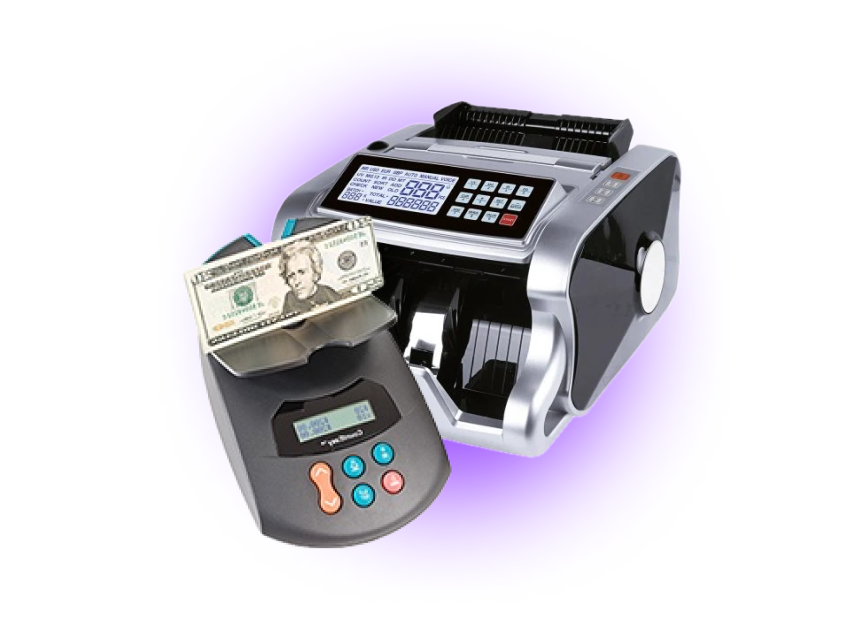
CountEasy2 is a count-by-weight money counter for register closeout that counts bills and coins in any order using an automatic count sequence. This suits mixed-till environments where separating coins and notes before counting adds time.
CountEasy TS is a touchscreen money scale with data storage and export capability. It counts all cash in a register in less than a minute and counts bills and coins six times faster than by hand.
Hi-Speed Bill Counters Handle Sorted Note Stacks
Hi-speed counters count USD notes regardless of denomination and alert users when counterfeit notes are detected. The FF-3000 is a hi-speed bill counter with counterfeit detection capability that counts up to 1,000 bills per minute.
Batch and running-total functions support deposit preparation and multi-drawer aggregation, which fits back-office workflows where notes are already separated from coins.
Counterfeit Detection Belongs in the Procurement Decision
Retailers are vulnerable to fraud through counterfeit payments, return and receipt fraud, and in-store credit application fraud. The more staff know about security features, the less likely they are to accept counterfeit notes. Counterfeit detection during counting adds an authentication step without requiring separate manual inspection.
Holiday volume widens the opportunity for counterfeit tender to enter circulation. Automated authentication reduces reliance on cashier vigilance when rushed employees may skip manual verification.
Staff Training and Procedures Strengthen Counterfeit Prevention
Device procurement should be paired with cashier training and an escalation procedure for suspect notes. Automated detection supplements but does not replace staff education on currency security features. Training creates a layered defense that catches suspect notes at checkout before they reach the cash room.
Managers should document escalation workflows and train seasonal staff on authentication steps before peak shopping days.
Currency Security Features Staff Should Recognize
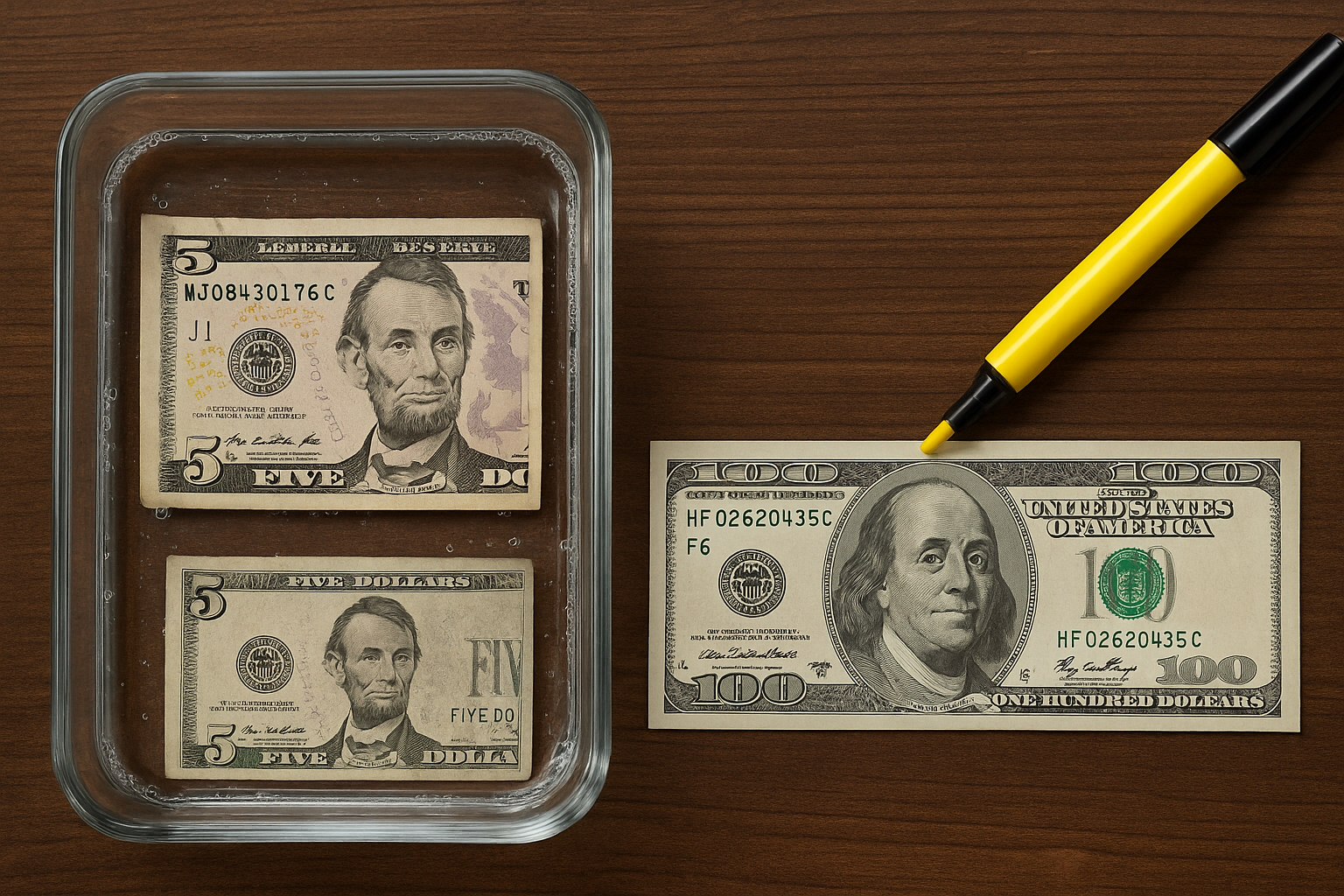
U.S. Currency Education Program training covers watermarks, security threads, color-shifting ink, and microprinting across denominations. Staff familiar with legitimate note characteristics improve first-line detection before suspect bills reach deposit preparation.
Seasonal employees benefit from simplified visual guides that highlight the most accessible security features. Training investment reduces counterfeit fraud losses more effectively than device reliance alone.
Suspect Note Handling Follows a Documented Procedure
Effective Nov. 1, 2024, the U.S. Secret Service no longer accepts electronic submissions of suspected counterfeit notes via the USDollars website. Businesses should establish escalation procedures routing suspect notes through local law enforcement or financial institution channels. Cashiers need clear guidance on when to refuse tender and whom to notify during suspected counterfeit incidents.
Documented procedures protect staff from confrontation risk and create audit trails supporting loss claims. Train employees to handle suspect notes without accusation while following protocol consistently.
Training Determines Whether Device Investment Pays Off
Counters with authentication reduce manual verification workload but require staff to understand what an alert means. Untrained employees override alerts or mishandle suspect notes, negating the investment.
Seasonal turnover makes simple, repeatable procedures more valuable than multi-step verification workflows that assume experience.
Device Feature Evaluation Covers Counting, Reporting, and Usability
Counting and authentication technologies should match the specific cash handling profile of the operation. Reporting and export capabilities should align with existing accounting workflows and variance investigation needs.
Usability, durability, and footprint affect day-to-day adoption. Devices that staff avoid using return none of the accuracy gain they were bought for.
Counting and Authentication Technologies to Weigh
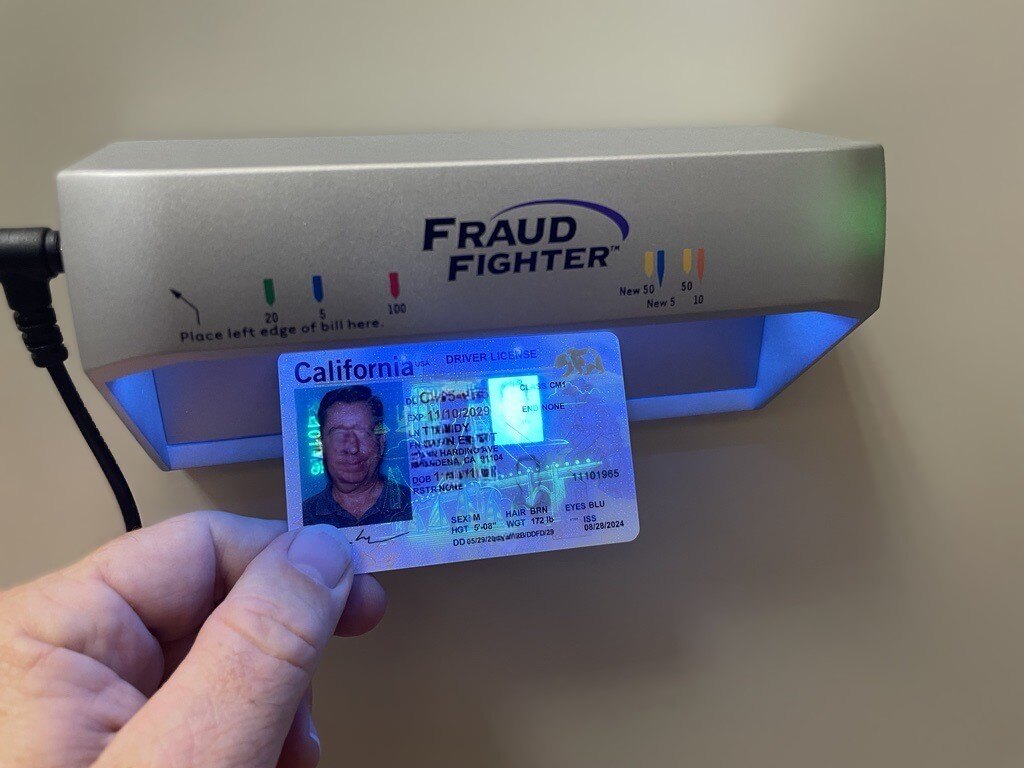
UV, magnetic, infrared, and dimensional analysis technologies provide layered authentication that catches multiple counterfeit production methods.
Single-technology detectors miss counterfeits that replicate only some security features. Multi-technology devices improve reliability but add cost that counterfeit exposure and note volume should justify.
Reporting and Export Capabilities Support Audit Needs
CountEasy TS can export data to a spreadsheet for integration with accounting systems, and it stores data from over 200 cash registers, supporting multi-location or multi-shift reconciliation workflows. Export capability reduces manual re-entry and creates digital audit trails supporting variance investigations.
Managers should assess whether physical tally receipts suffice or whether spreadsheet export simplifies deposit preparation and oversight across locations.
Usability, Durability, and Footprint Affect Day-to-Day Use
A simple interface and clear training materials fit seasonal temporary staff needs when experienced cash handlers are unavailable. Devices requiring multi-step calibration or frequent maintenance create adoption barriers during high-turnover periods. Touchscreen interfaces with visual prompts reduce training time compared with button-based operation.
Footprint matters in space-constrained cash rooms. Verify device dimensions against available workspace and consider portability needs for counting at multiple stations.
Operational Metrics Guide the Bill Counter Procurement Decision
Procurement decisions should be data-driven rather than based on perceived peak volume. Documenting current closeout workflows reveals device class fit better than evaluating features in isolation.
Staffing patterns and seasonal turnover influence device complexity tolerance. Data and security needs determine whether simple counting or full audit-trail export is required. The table below sets out what to measure before requesting quotes.
|
What to measure |
How to capture it |
What it decides |
|---|---|---|
|
Registers and drawers closed per night |
Count active tills on a typical night and a peak night |
Device capacity and how many units you need |
|
Average and peak drawer value |
Pull closeout totals from the last four weeks |
Whether speed gains justify device cost |
|
Bills vs coins vs mixed denominations |
Sample three drawer counts by composition |
Bill counter versus count-by-weight scale |
|
Counting location |
Note whether drawers are counted at register, back office, or centrally |
Portability and footprint requirements |
|
Variance frequency and investigation time |
Log variances and minutes spent resolving them for one month |
Accuracy improvement value and reporting depth |
|
Staff involved in closeout |
Count people per shift and seasonal turnover rate |
Interface complexity and training scope |
|
Accounting integration |
Confirm whether your system accepts spreadsheet imports |
Physical tally versus exportable reports |
Drawer Types and Cash Volume Set the Device Class
Inventory the registers and drawers closed per night, then assess average and peak drawer value to judge whether speed improvements justify device cost. The ratio of bills to coins to mixed denominations decides between a bill counter and a weight scale.
Where drawers are counted sets portability needs, and your bank or bag workflow determines whether batch and total functions match existing procedures.
Staffing and Seasonal Turnover Influence Device Choice
Count the number of staff and managers involved in closeout to assess training scope and time. High seasonal turnover favors devices with intuitive interfaces requiring minimal training time. Operations relying on temporary employees benefit from visual prompts and error-recovery guidance, reducing manager intervention.
Experienced cash-office staff can run more complex workflows. Stores using seasonal hires should prioritize simplicity over advanced feature sets.
Data and Security Needs Shape Your Closeout Workflow
Review current variance frequency and average investigation time to quantify accuracy improvement value. Determine need for counterfeit detection at point of sale versus back office based on transaction patterns and risk tolerance. Assess whether exportable reports or a physical tally matches your accounting system.
Document whether variance investigations need denomination-level detail or aggregate totals. Multi-location operations may need centralized data for district-level oversight.
Bill Counter Integration Into Holiday Operations Follows Workflow Assessment
Device selection should follow workflow assessment rather than precede it. Managers who document their current closeout process before reading equipment specifications make better-informed decisions, and matching device class to operational needs prevents overbuying features or underestimating capacity.
Preparation starts with measuring current counting time and variance frequency.
Device Classes Matched to Your Store’s Cash Handling Profile
Mixed coin and bill drawers suit count-by-weight scales like CountEasy2 or CountEasy TS. Sorted bill stacks during deposit preparation suit hi-speed counters like the FF-3000. Multi-register environments needing data export align with touchscreen devices.
Counterfeit risk at checkout justifies detection during transaction acceptance rather than back-office counting. Map device capabilities to specific pain points in your current workflow rather than to maximum speed specifications.
Practical Steps to Measure and Prepare for Peak Closeouts
Time your current manual closeout across a typical night and a peak night before evaluating speed claims. Document variance rate per drawer, and count active registers during Black Friday or a comparable peak day to size capacity.
Survey staff on closeout pain points to see whether speed, accuracy, detection, or reporting gaps matter most. Testing with your actual till composition reveals workflow fit better than a showroom demonstration.
Balancing Speed, Accuracy, and Security in Reconciliation
Speed improvements without accuracy gains create false efficiency when variance investigations offset faster counting. Counterfeit detection capability adds transaction time but prevents loss events exceeding device cost. Exportable data creates audit trails supporting variance resolution even when absolute counting speed remains unchanged.
Evaluate total closeout cycle time including recounts and variance investigations rather than raw bills-per-minute figures. Devices that cut error rates often improve net closeout duration more than faster counters needing frequent rechecks.
Holiday Cash Volume Handling and Bill Counter Procurement: Making Informed Choices for Efficient End-of-Day Reconciliation
Holiday retail concentrates cash volume into compressed reconciliation windows that still demand accuracy. Effective procurement matches device class to operational need rather than to speed specifications. Inventory drawer types, transaction patterns, staffing, and data requirements before evaluating money counters or currency scales.
Count-by-weight scales suit mixed-till environments. High-speed bill counters fit sorted note stacks and deposit preparation. Detection-enabled devices address counterfeit risk when authentication at counting supplements point-of-sale screening.
Get Holiday Cash Handling Equipment Matched to Your Closeout
FraudFighter™ has designed and manufactured counterfeit detection and cash handling equipment since 2000 for retailers, banks, casinos, restaurants, and rental operators. Our specialists will walk through your register count, drawer composition, and closeout timeline, then recommend the device class that fits before peak season starts.
Call 888.664.9214 in the US or 626.225.0203 internationally, Monday through Friday. You can also contact FraudFighter™ and request more information to get a quote on the money counters and currency scales that match your holiday cash volume handling needs.
Frequently Asked Questions About Holiday Cash Volume Handling
Q1. How many bill counters does a multi-register store need during the holidays?
A. Base the number on how many drawers close inside the same window, not on total register count. A store closing four drawers back-to-back usually needs one count-by-weight scale in the cash office, plus a second unit if closeouts overlap. Portable scales with a carry handle let one manager move between stations, which lowers the unit count. Time your closeout sequence across one peak week before deciding.
Q2. Should retailers choose a count-by-weight scale or a bill counter for end-of-day reconciliation?
A. Drawer composition decides it. Count-by-weight scales handle bills and coins together, which suits register drawers where coins are a real share of the total. Hi-speed bill counters process sorted notes at high throughput, which suits deposit preparation after coins are separated. Many operations run both: a scale at register closeout and a counter in the cash room.
Q3. Do bill counters eliminate cash variances?
A. No. Bill counters reduce miscounts from manual counting, but variance also comes from cashier errors, returns, voids, deposits, POS issues, and theft. Devices narrow the range and shorten investigations by producing a documented, repeatable count. Pair the equipment with a written closeout procedure and a variance log to see where the remaining difference originates.
Q4. Which counterfeit detection features matter for holiday retail?
A. Layered authentication matters more than any single check. UV, magnetic ink, infrared, and dimensional analysis each catch different production methods, and devices combining them flag notes single-technology detectors miss. At checkout, an automatic alert during the count beats asking rushed cashiers to inspect notes by hand. Match detection depth to your counterfeit exposure and note volume.
Q5. How should retailers train seasonal staff on cash handling before peak season?
A. Keep the procedure short and repeatable. Cover the security features taught in the U.S. Currency Education Program, show staff how to read the device alert, and give one escalation path for suspect notes. Train before the first peak weekend, not during it, and post a one-page visual guide at each register. Turnover makes a simple, documented process more valuable than forensic depth.