

 9 minute read
What Is Counterfeit Prevention and Why Do Cash-Heavy Businesses Need It?
Counterfeit prevention encompasses technologies, processes, and training that detect fake currency before acceptance. Businesses implementing these systems protect revenue, maintain regulatory compliance, and preserve customer trust. The practice has evolved from simple visual inspection to sophisticated multi-spectral analysis and machine learning algorithms.
Cash-dependent operations face disproportionate exposure to counterfeit fraud, particularly as counterfeiting techniques advance. With USD 70-200 million in forged U.S. notes currently circulating, businesses accepting high cash volumes require systematic counterfeit detection capabilities. The average fraud incident costs small and medium-sized businesses $254,445, making prevention a critical operational priority.
Key Takeaways
- The global counterfeit money detection market will reach USD 5.31 billion by 2030, driven by regulatory requirements and fraud incidents
- Every $1 lost to fraud costs retailers $4.61 in total operational and remediation expenses
- Detection solutions range from $5 detector pens to $5,000+ high-speed counters, each serving specific business needs
- Cash usage remains significant among Baby Boomers (28-35% of transactions) and rural populations (9.2% unbanked rate)
- Documented ROI ranges from 100% to 1,200% annually, with enterprise implementations achieving payback within months
What Is Counterfeit Prevention?
Counterfeit prevention is a systematic approach combining technology and procedures to identify fake currency. The global counterfeit money detection market reached USD 4.10 billion in 2025 and will grow to USD 5.31 billion by 2030. This expansion reflects increasing fraud sophistication and tightening regulatory standards across financial sectors.
North America represents 38.5% of the global market, driven by compliance mandates and high transaction volumes. The Asia-Pacific region experiences the fastest growth at 6.9% CAGR, fueled by retail modernization and cash-heavy economies. Currency counters with integrated detection comprise 39.4% of technology market share, followed by UV scanners at 28.6%.
What Are the Main Types of Counterfeit Detection Technologies?
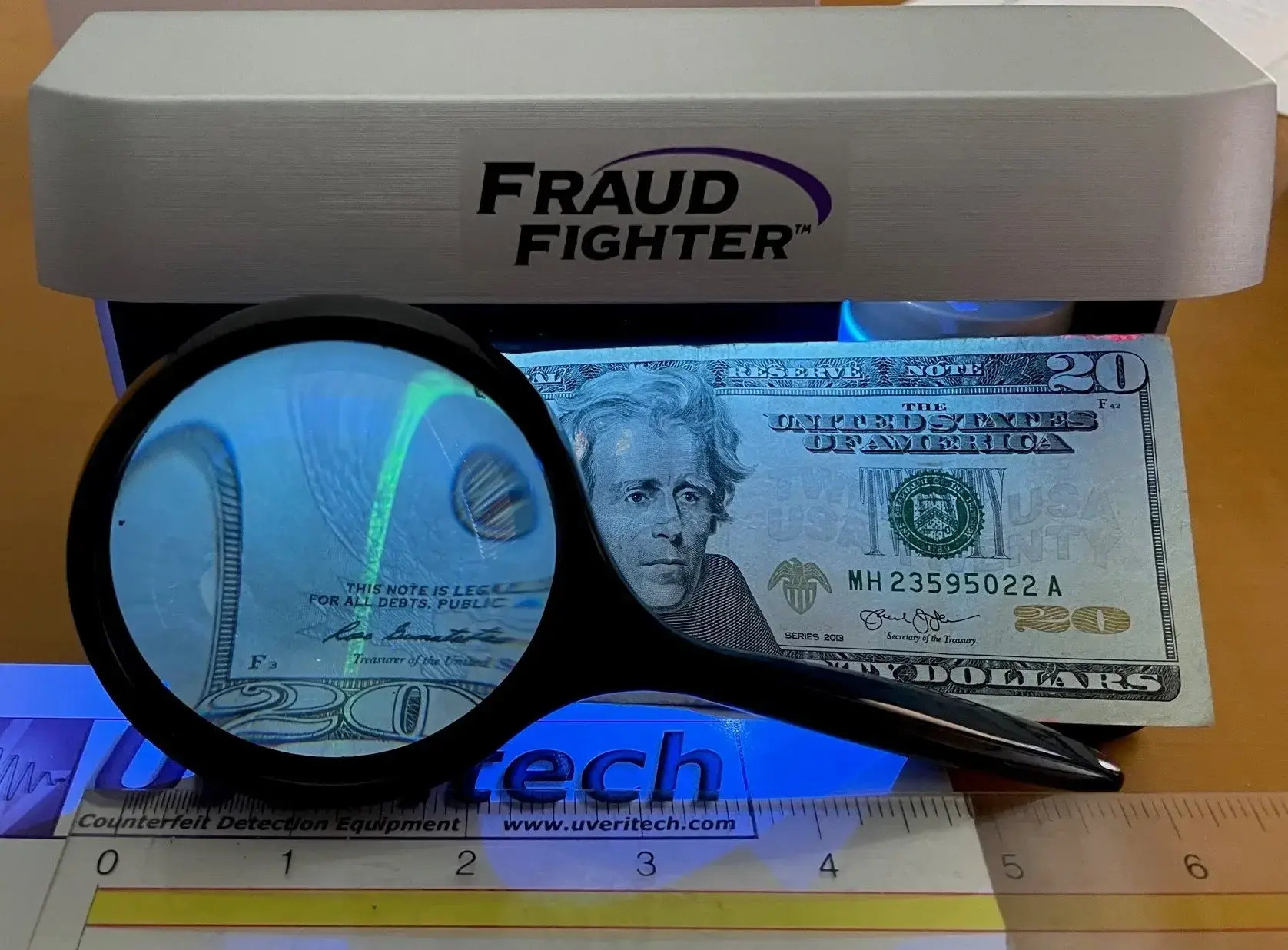
Detector pens utilize chemical iodine solutions that react with starch in standard paper. These tools leave dark marks on counterfeits while remaining clear or amber on genuine currency. Desktop units employ Ultraviolet (UV), Magnetic Ink (MG), and Infrared (IR) technologies to verify multiple security features simultaneously.
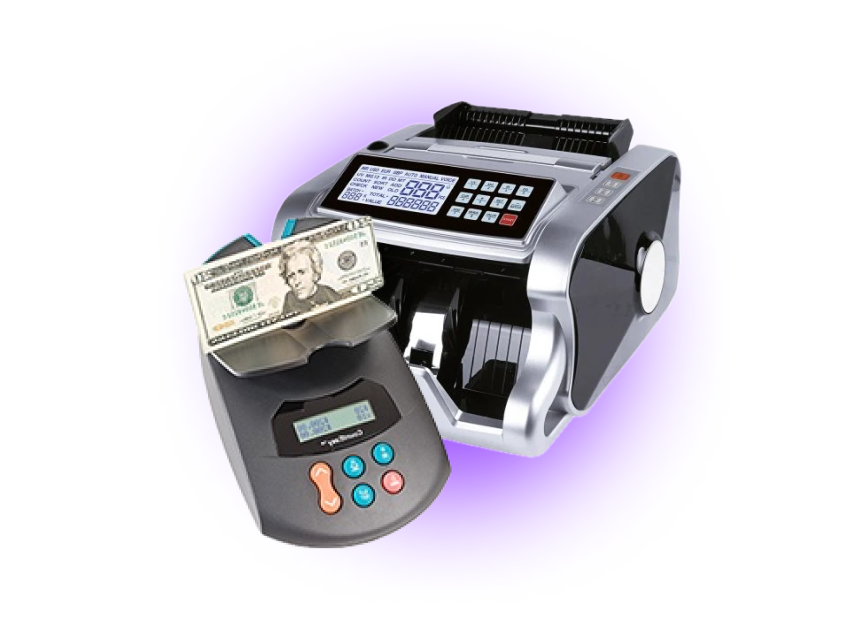
Software and SaaS platforms utilize machine learning algorithms for real-time anomaly detection and pattern recognition. High-speed currency counters process up to 1,300 bills per minute with advanced multi-spectral scanning capabilities. Counterfeit detectors range from $5 detector pens to $5,000+ enterprise systems, each addressing specific operational requirements.
How Do Security Inks and Anti-Counterfeit Materials Work?
Security inks involve luminescent materials, holograms, and microprinting embedded directly into currency during production. These features create verification points that sophisticated detection equipment can authenticate in milliseconds. The security inks market measured USD 4.5 billion in 2024 and will reach USD 7.0 billion by 2035.
Currency producers continuously develop new anti-counterfeit features to stay ahead of counterfeiting techniques. Modern banknotes incorporate multiple security layers that require specialized equipment to replicate successfully. This escalating technological arms race drives continuous innovation in both currency production and detection capabilities.
What Are the Common Tools Used by Businesses for Counterfeit Detection?
Detector pens provide entry-level verification at $5-$50 per unit, suitable for micro-businesses with limited budgets. Desktop detectors verify multiple security features in 0.5-2 seconds per note, costing $100-$800 for small-to-medium operations. High-speed counters process bulk transactions at 1,300 bills per minute, representing $1,500-$5,000+ investments for banks and large retailers.
Software solutions offer continuous learning improvements and centralized data analytics across multiple locations. These platforms require ongoing subscription costs but provide scalability and remote monitoring capabilities. Different types of counterfeit money require varying detection approaches, making technology selection dependent on specific threat profiles.
Why Is Counterfeit Prevention Important for Cash-Heavy Businesses?
Cash-heavy operations face unrecoverable losses when accepting counterfeit bills, as financial institutions refuse reimbursement. A robust counterfeit prevention framework protects both immediate financial interests and long-term brand reputation. The multiplication effect of fraud costs—$4.61 per $1 of direct loss—makes prevention significantly more economical than remediation.
Businesses without systematic detection capabilities become targets for professional counterfeiters who identify vulnerable locations. Implementation of visible detection equipment serves as both operational protection and criminal deterrence. Regulatory agencies increasingly require documented fraud prevention protocols, making compliance another critical driver for adoption.
What Financial and Reputational Risks Do Counterfeit Bills Pose?
Every $1 lost to counterfeit fraud generates $4.61 in total costs after operational disruption and customer remediation expenses. The average cost of fraud for SMBs reaches $254,445 per incident, often exceeding annual profit margins. Counterfeit incident reports increased 19% in early 2024, reflecting both improved detection and rising fraud sophistication.
Consumer trust suffers lasting damage when brands associate with counterfeit incidents—66% lose confidence in affected businesses. Seventy-six percent of consumers become less likely to purchase from brands linked to counterfeit goods. These reputational consequences extend far beyond the immediate financial loss of a single fraudulent transaction.
How Does Cash Dependency Vary Across Demographics and Regions?
Cash accounted for 14% of all consumer payments in 2024, with usage patterns varying significantly by generation. Baby Boomers use cash for 28-35% of transactions, representing the highest exposure risk for retail operations. Gen X maintains moderate usage at 18-22%, while Millennials rely on cash for only 10-12% of purchases.
Rural areas show unbanked rates of 9.2% compared to 5.7% in urban markets, driving higher cash dependency. Cash-heavy business security requirements intensify in communities with limited digital banking infrastructure. Geographic and demographic factors directly influence both counterfeit exposure risk and appropriate detection technology selection.
What Are the Business Sizes Most Affected by Counterfeit Currency?
Micro businesses show adoption rates of 15-25% for detection technology compared to 85%+ among enterprise operations. This gap creates vulnerability concentrations in small retail, hospitality, and independent service businesses. Limited budgets and lower transaction volumes often lead micro-businesses to forgo systematic counterfeit prevention despite significant exposure.
Small and medium-sized businesses occupy the middle ground with 35-75% adoption rates based on industry sector. These operations typically implement products like counterfeit detectors at the desktop level, balancing cost and accuracy requirements. Enterprise organizations deploy comprehensive systems with centralized monitoring and compliance reporting capabilities.
How Do Counterfeit Detection Solutions Differ by Technology and Usage?
Detection technologies span a spectrum from simple chemical tests to AI-powered analytical platforms. Each technology tier addresses specific operational contexts, budget constraints, and accuracy requirements. Selection depends on transaction volume, staff training capacity, and acceptable false positive rates.
Hardware solutions dominate the market with 85% of buyers prioritizing accuracy over initial cost. Software platforms attract 70% of purchasers focused on integration capabilities and scalability across multiple locations. The technology matrix reflects diverse business needs ranging from single-location retailers to multi-national banking operations.
What Are the Features of Portable Detector Pens and Handheld Devices?
Detector pens provide immediate visual feedback by marking counterfeit bills with dark stains. These devices prove less effective against bleached bills, where genuine currency paper receives counterfeit printing. The limitation to paper authentication means pens cannot verify security features like watermarks or security threads.
Portability and zero training requirements make detector pens ideal for environments with high employee turnover. Staff can perform verification at point-of-sale without interrupting customer service flow. However, professional counterfeiters specifically target locations relying solely on chemical detection due to known vulnerabilities.
How Do Desktop UV and Multi-Spectral Detectors Compare?
Desktop detectors achieve 99%+ accuracy by simultaneously verifying UV, magnetic, and infrared security features. These units require dedicated counter space and electrical connections, limiting placement flexibility in retail environments. Multi-spectral analysis identifies sophisticated counterfeits that pass single-technology screening methods.
Processing speed of 0.5-2 seconds per note enables practical verification during normal transaction workflows. Desktop systems provide significantly higher accuracy than detector pens while maintaining reasonable upfront costs. Businesses processing moderate cash volumes find these units offer optimal balance between investment and protection.
What Benefits Do High-Speed Currency Counters and AI-Based Solutions Offer?
Processing capabilities increased from 200 to 1,300 bills per minute with modern high-speed money counters. Banks and casinos handling bulk cash deposits achieve 85% reductions in manual labor costs through automation. False positive rates dropped over 80% through advanced algorithms that distinguish genuine security features from damage or wear.
High-speed counters require regular maintenance schedules and trained operators to maintain optimal performance levels. Software solutions demand ongoing subscription costs but provide continuous updates matching emerging counterfeit techniques. Strategic fraud mitigation increasingly relies on integrated hardware-software platforms that deliver both speed and analytical insights.
How Do Businesses Choose the Right Counterfeit Prevention Solution?
Selection criteria vary dramatically based on organizational size, transaction volume, and regulatory requirements. Hardware buyers prioritize accuracy (85%) while software purchasers emphasize integration capabilities (70%). Budget-conscious buyers sacrifice some accuracy for cost savings (45%), whereas enterprise operations require compliance certifications (90%).
Decision frameworks balance immediate protection needs against long-term operational efficiency and scalability requirements. Businesses experiencing recent fraud incidents typically accelerate implementation timelines and increase budget allocations. Proactive money validation becomes standard practice in industries with high counterfeit exposure or strict regulatory oversight.
What Factors Influence Purchasing Decisions Among Different Buyer Types?
Accuracy and reliability drive 35% of purchasing decisions across all business segments and technology categories. Cost considerations represent 25% of decision weight, particularly for small businesses operating on constrained budgets. Ease of use accounts for 20% of selection criteria, reflecting high employee turnover in retail and hospitality sectors.
Speed and throughput requirements influence 12% of buyers, concentrated in banking and high-volume retail operations. Support and maintenance considerations factor into 8% of decisions, primarily among enterprise clients requiring guaranteed uptime. Reference materials like a counterfeit detector buyer's guide help buyers navigate these competing priorities systematically.
How Does Transaction Volume Affect Solution Selection?
Micro businesses spend $50-$300 annually on detection technology, typically choosing detector pens or basic UV lights. Small operations allocate $300-$1,500 for desktop multi-spectral units matching moderate transaction volumes. Medium-sized businesses invest $1,500-$5,000 in high-speed counters to process daily cash handling efficiently.
Enterprise organizations budget $5,000-$50,000+ for integrated software-hardware systems with centralized reporting capabilities. Manual processes become increasingly impractical as transaction volumes scale beyond individual staff capacity. Business continuity planning requires automated detection to prevent operational bottlenecks during peak transaction periods.
What Role Does Ease of Use and Maintenance Play in Adoption?
Complex systems lead to user error or complete abandonment when staff lack adequate training time. Retail environments with 70%+ annual turnover require detection tools operable within minutes of basic instruction. Equipment requiring specialized maintenance or frequent calibration creates operational disruptions and hidden ongoing costs.
Rural areas demonstrate slower technology adoption due to limited technical support infrastructure and digital connectivity challenges. Solutions designed for plug-and-play operation with minimal training requirements achieve highest actual utilization rates. Maintenance accessibility directly impacts total cost of ownership and long-term system effectiveness.
What Are the Financial Impacts and ROI of Counterfeit Prevention?
Return on investment for counterfeit detection ranges from 100% to 1,200% annually across documented implementations. Micro-businesses achieve payback in 30-60 days through prevented losses exceeding modest equipment investments. Enterprise deployments generate returns through combined loss prevention, labor efficiency, and regulatory compliance benefits.
The multiplication effect of fraud costs means prevention delivers value far exceeding face value of detected counterfeits. Operational disruptions from investigating fraud incidents consume management time and create customer service failures. Comprehensive counterfeit fraud prevention white papers document financial models across different business contexts and implementation scales.
What Are the Direct and Indirect Costs of Counterfeit Fraud?
Direct losses include unrecoverable face value of accepted counterfeit currency, rejected by banks during deposit. Operational disruption costs emerge from transaction investigation, staff retraining, and process modification following fraud incidents. Customer remediation expenses extend beyond refunds to include goodwill gestures and loyalty program compensation.
Reputational damage generates long-term revenue impacts as customer confidence erodes and negative publicity spreads. Regulatory fines and increased audit scrutiny create additional financial burdens for businesses with documented fraud incidents. Insurance premiums often increase following claims, creating perpetual cost increases that compound original losses.
How Have Businesses Benefited from Specific Counterfeit Prevention Implementations?
An enterprise retailer achieved 229% ROI through AI-powered fraud detection reducing false positives over 80%. The implementation eliminated chargebacks and enabled market expansion into previously restricted high-risk regions. Total value included both prevented losses and new revenue from expanded operational capabilities.
An independent retail store prevented $400-$1,200 in monthly losses through $200 investment in portable UV detectors. The solution delivered 12-72x annual ROI with payback occurring within the first month of operation. A regional bank invested $10,000 across five branches in high-speed counters, yielding over 300% annual ROI.
What Expert Frameworks Guide Investment in Detection Technologies?
Expert recommendations follow tiered approaches matching detection capabilities to transaction volume and risk exposure. Micro-businesses should implement budget solutions immediately, achieving exceptional ROI (300-1,200% annually) with minimal training requirements. Small-to-medium retailers benefit from desktop UV/MG detectors with 3-6 month payback periods.
High-volume operations require high-speed counters despite premium costs, justified through labor savings and compliance benefits. Enterprise organizations need integrated software platforms providing data analytics and centralized management across multiple locations. Decision frameworks emphasize matching technology sophistication to operational complexity and regulatory requirements.
Counterfeit Prevention as a Strategic Investment for Cash-Heavy Businesses
Counterfeit prevention represents critical infrastructure for cash-handling operations rather than discretionary expense. Documented implementations consistently demonstrate rapid payback periods and substantial ongoing value through prevented losses. The convergence of increasing fraud sophistication, regulatory pressure, and consumer protection expectations makes systematic detection non-negotiable for responsible business operations.
Organizations implementing comprehensive detection capabilities protect not only immediate revenue but also long-term brand equity and customer relationships. The technology market continues evolving with AI-powered solutions and integrated platforms addressing enterprise-scale requirements. Businesses prioritizing proactive money validation gain competitive advantages through operational efficiency and enhanced customer confidence.
FraudFighter has helped organizations across banking, retail, hospitality, and automotive sectors implement proven detection systems since 2000. Their documented case studies demonstrate measurable results including Wells Fargo's deployment of 25,000+ units preventing $200K in losses within 30 days. These real-world implementations validate the strategic importance of systematic counterfeit prevention for protecting business operations.
Protect Your Cash Operations with FraudFighter
Counterfeit losses are preventable when the right detection technology meets a workflow your team can actually use at the register, the teller window, or the cage. FraudFighter has spent more than 25 years building point-of-sale fraud prevention tools that Wells Fargo, Bank of America, Disneyland, Kroger, and thousands of other organizations rely on every day — including the deployment that prevented $200,000 in counterfeit losses across 100 branches in a single 30-day pilot.
Our fraud prevention specialists will review your transaction volume, cash exposure, and compliance requirements, then recommend the detection solution that fits your operation. No generic packages. No guesswork for your frontline staff. To protect your business from counterfeit losses, contact FraudFighter for a free, no-obligation consultation. If your team also handles IDs at the counter, ask about our advanced identity authentication solutions during the same call, so both the cash and the person presenting it get checked in one pass.