


 10 minute read
Hotel Group Identity Verification: A Multi-Property Procurement Framework
Key Takeaways
- Hotel group identity verification runs on driver's license scanning (78%), passport verification (65%), and digital ID checks (62%) as the primary methods
- Regulatory penalties for KYC violations range from USD 100,000 to USD 500,000 per incident, with USD 6.6 billion in total penalties issued in 2023
- Biometric verification accounts for 35.84% of the identity verification market and is growing at a 18.2% CAGR through 2030
- Cloud-based solutions represent 65.12% of deployments, offering lower initial costs and faster implementation than on-premises systems
- Multi-property hotel groups require unified systems supporting shared DNR lists (45% of groups), PMS integration (91% priority), and standardized audit trails
Hotel group identity verification lets operators authenticate guest credentials across every property while holding one compliance standard. The global identity verification market reached USD 14.34 billion in 2025 and is projected to expand to USD 29.32 billion by 2030, representing 15.4% compound annual growth. Hotel operators face pressure from three directions: regulatory requirements demanding documented verification procedures, financial losses from chargebacks and fraudulent reservations, and the operational load of holding 50 to 500 properties to one standard. Property management system integration, shared Do Not Rent databases, and timestamped audit trails now function as minimum requirements rather than competitive advantages.
Below, you'll find the procurement framework: the verification methods hotels actually use, the regulatory and chargeback risks driving the spend, a side-by-side comparison of biometric and document authentication, deployment models and their costs, a phased rollout plan, and the documentation examiners ask for. FraudFighter has built identity authentication systems for hotel groups, banks, and rental agencies since 2000, with more than 25,000 units deployed.
Hotel Group Identity Verification in the Hospitality Sector
Identity verification in hospitality confirms guest credentials during check-in using document scanning, biometric matching, or database cross-reference. Hotels use these systems to prevent fraud, support chargeback disputes, and maintain compliance with state and federal regulations.
The verification process typically occurs at check-in when front desk staff capture government-issued identification data through scanning or manual entry. Most hotels and motels now deploy digital verification systems that extract data from driver's licenses and passports within seconds.
Verification Methods Hotels Use Most
Driver's license scanning remains the primary verification method at 78% adoption across hotel properties. Digital ID verification at check-in has reached 62% as hotels shift from manual inspection to automated systems.
|
Verification method |
Adoption |
What it confirms |
|---|---|---|
|
Driver's license scanning |
78% |
Document data, barcode content, and state security features |
|
Passport verification |
65% |
Machine-readable zone data on international travel documents |
|
Digital ID verification at check-in |
62% |
Automated data extraction and database cross-reference |
|
Facial recognition |
31% |
Live biometric match against the document photo |
Biometric verification covers facial recognition, fingerprint scanning, iris scanning, and behavioral biometrics, confirming guest identity without document dependency.
Multi-Property Coordination Changes the Verification Requirement
Multi-property hotel groups require shared Do Not Rent lists across locations, with 45% of groups now maintaining centralized DNR databases. Hotel managers prioritize multi-property support at 94% and shared DNR functionality at 87% when evaluating identity verification solutions.
Centralized verification systems let property managers flag problem guests at one location and prevent rebooking across the entire portfolio. DNR lists track guests who commit fraud, property damage, or policy violations, creating a unified defense layer that isolated properties cannot achieve. A cloud management portal gives compliance teams one view of scan activity across every property.
Consumer Priorities That Shape Verification Solutions
Security ranks as the highest consumer priority at 84%, followed by ease of use at 75% and privacy at 58%. Fast verification matters to 47% of consumers, while accessibility concerns 37% of guests during the check-in process.
Hotel groups must balance security controls with guest experience, as verification delays create bottlenecks during peak check-in hours. Consumer comfort with verification technology varies by generation, with Gen Z showing 72% acceptance of facial recognition compared to 54% among Baby Boomers.
Hotel Group Identity Verification Protects Revenue and Compliance Standing
Identity verification reduces financial losses from chargebacks, prevents fraud ring exploitation, and creates defensible audit trails for regulatory inspections. Hotels without standardized verification face penalties averaging USD 100,000 to USD 500,000 per KYC violation, with total industry penalties reaching USD 6.6 billion in 2023.
Synthetic identity fraud, meaning fake personas combining real and fabricated data, grows at 30% annually and exploits manual verification gaps. Automated systems using id authentication technology detect document inconsistencies and cross-reference government databases faster than visual inspection.
Regulatory and Fraud Risks Driving Identity Verification
CCPA violations involving biometric data carry penalties from USD 2,500 to USD 7,500 per incident, while federal KYC violations range from USD 100,000 to USD 500,000. FTC privacy regulations require explicit consent before collecting biometric data and mandate secure storage with defined retention limits.
Identity Verification Strengthens Chargeback Defense
Hotel managers rank chargeback defense as a 79% priority when selecting verification systems that preserve timestamped evidence. Documented identity verification creates admissible evidence during chargeback disputes when guests claim unauthorized charges or service failures.
Credit card processors and PCI compliance standards require merchants to demonstrate authentication efforts before reversing chargebacks. Hotels without timestamped verification records lose disputes by default, absorbing both the transaction amount and processing fees.
Shared Do Not Rent Lists Close Portfolio Gaps
Shared DNR lists prevent repeat problem guests from exploiting multiple properties within a hotel group portfolio. Hotel managers prioritize shared DNR functionality at 87%, while 45% of hotel groups now require centralized DNR systems across all locations.
Unified DNR systems flag guests at booking rather than at check-in, preventing revenue loss from cancelled reservations and staff time spent managing problem guests. Problem guests identified at one property cannot simply relocate to another location within the same brand or management group.
Biometric and Document Authentication Compared
Biometric and document authentication solve different halves of the problem, and hotel groups rarely pick only one. The table below sets the two methods against the factors procurement teams actually score.
|
Factor |
Biometric verification |
Document authentication |
|---|---|---|
|
Market share (2025) |
35.84% |
17.5% |
|
Growth rate through 2030 |
18.2% CAGR |
21.5% CAGR |
|
Verification latency |
2 to 10 seconds |
1 to 5 seconds |
|
Accuracy |
99.9% in controlled conditions |
95% adoption across financial services |
|
Main strength |
Confirms the person, not only the document |
Broad regulatory acceptance, no biometric hardware |
|
Main limitation |
GDPR and CCPA restrictions, demographic bias |
Vulnerable to deepfakes and 3D-printed forgeries |
Advantages and Challenges of Biometric Verification
Projected biometric identity-verification checks will reach 32.2 billion in 2026 and 70.1 billion by 2030, representing 117.6% growth as facial recognition and fingerprint scanning replace manual inspection.
Biometric systems reduce false positives by 60% compared to manual review while achieving 99.9% accuracy in controlled environments. Privacy regulations restrict biometric collection, demographic bias affects facial recognition accuracy, and hardware costs create deployment barriers for budget-constrained properties.
Document Authentication Complements Biometric Methods
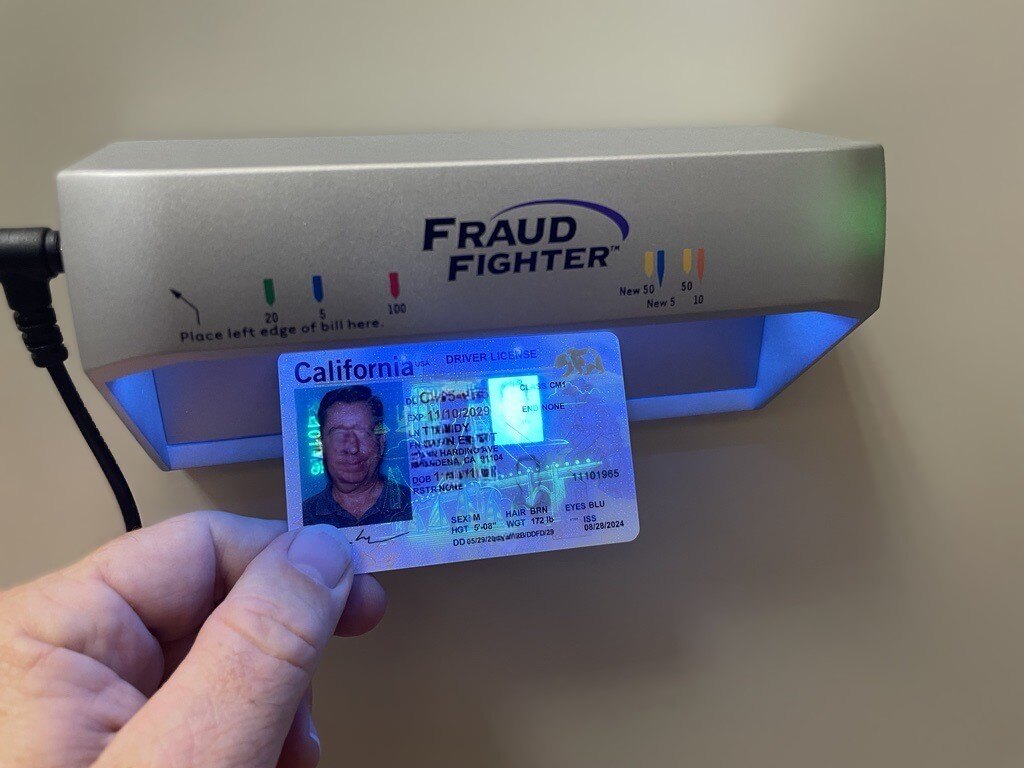
Passport authentication and driver's license verification extract data from government-issued documents without requiring specialized biometric hardware. ID document scanners read forensic features on the credential itself and return a result at the front desk.
Document authentication systems use OCR, template matching, barcode reading, and hologram detection to verify credential authenticity. These systems face limitations from sophisticated forgeries, require high-quality document images, and cannot verify liveness without supplementary biometric checks.
Multi-Factor Authentication in Hotel Environments
Multi-Factor Authentication represents 60% of the biometric verification segment and grows at a 16.8% CAGR through 2030. MFA combines hardware tokens, software-based authentication, and biometric verification to create layered security, preventing credential theft.
Hotels use MFA primarily for employee access controls rather than guest verification, since multi-step authentication creates unacceptable friction during high-volume check-in periods.
Deployment Models for Identity Verification Systems
Cloud-based solutions account for 65.12% of identity verification deployments as hotels prioritize low initial costs and rapid implementation.
|
Deployment model |
Initial cost |
Deployment time |
Data residency |
Scalability |
|---|---|---|---|---|
|
Cloud |
USD 0 to 50,000 |
2 to 4 weeks |
Vendor-managed |
Unlimited |
|
On-premises |
USD 100,000 to 500,000 |
3 to 6 months |
Full control |
Hardware-limited |
|
Hybrid |
USD 50,000 to 150,000 |
4 to 8 weeks |
Configurable |
Flexible |
Cloud, On-Premises, and Hybrid Architectures Differ on Cost and Control
Cloud-based solutions deliver scalability with vendor-managed infrastructure, while on-premises systems provide full data residency control at a higher operational cost. Hybrid architectures suit hotel groups that must hold guest data in specific jurisdictions while running verification centrally. Browser-based WebID verification extends checks to pre-arrival and remote check-in without hardware at every property.
Manufacturing and Integration Considerations
Hardware supply chains concentrate 70% of production in China, creating geopolitical risks from tariffs and export controls. Lead times extend 4 to 12 weeks for custom hardware orders with minimum quantities ranging from 100 to 1,000 units.
PMS Integration Determines Front Desk Adoption
PMS integration ranks as a 91% priority among hotel managers evaluating ID verification for business applications. Property management systems require API connections to automate guest data transfer from verification systems.
Front desk usability ranks at 85% priority, as high staff turnover demands intuitive systems requiring minimal training. PMS integration eliminates manual data entry errors and reduces check-in time by automating credential transfer from scanning devices to reservation systems.
Multi-Property Procurement Planning and Execution
Multi-property procurement requires phased rollouts deploying 50 properties per quarter with dedicated project management and standardized staff training. Pilot programs at 2 to 3 properties establish baseline metrics for staff adoption, guest experience, and incident reduction before full deployment.
Vendor Evaluation Criteria That Carry the Most Weight
Compliance officers and hotel managers score vendors on different axes. Both scorecards must clear before procurement advances.
|
Evaluation criterion |
Priority |
Who weighs it |
|---|---|---|
|
Regulatory alignment |
95% |
Compliance officers |
|
Audit trail preservation |
92% |
Compliance officers |
|
SOC 2 Type II certification |
82% |
Compliance officers |
|
Multi-property support |
94% |
Hotel managers |
|
PMS integration |
91% |
Hotel managers |
|
Front desk usability |
85% |
Hotel managers |
|
Chargeback defense evidence |
79% |
Hotel managers |
Vendor evaluation must verify sanctions screening integration, false positive rates below 2%, and data residency options meeting GDPR requirements. FraudFighter holds SOC 2 Type II certification under AICPA standards, covering security, availability, processing integrity, confidentiality, and privacy controls.
Pilot Programs Reduce Rollout Risk
Hotel procurement teams should deploy at 2 to 3 pilot properties to measure staff adoption, guest experience impact, and incident reduction before committing to enterprise-wide implementation. Pilot results provide negotiation leverage for volume discounts, SLA terms, and implementation support packages.
Successful pilots demonstrate 95% staff adoption, 30% to 40% chargeback reduction, and 12 to 15-minute decreases in average check-in time. These metrics justify budget allocation and establish baseline expectations for phased rollouts across remaining properties.
Implementation Timelines and Milestones
|
Phase |
Weeks |
Work completed |
|---|---|---|
|
Compliance assessment |
1 to 2 |
Identify applicable regulations, map current processes, document data flows, identify gaps |
|
Solution selection |
3 to 6 |
Evaluate SOC 2 certification, verify sanctions screening, confirm audit trails, test false positive rates, validate data residency |
|
Implementation |
7 to 16 |
Develop retention policies, establish access controls, configure monitoring, train staff, conduct end-to-end testing |
|
Audit preparation |
17 to 20 |
Document procedures, preserve evidence, run internal audits, prepare regulatory materials, establish ongoing monitoring |
Compliance and Audit Requirements for Hotel Identity Verification
Compliance officers prioritize audit trail preservation at 92% to maintain timestamped records with user attribution and decision rationale. Hotels must preserve verification records for 5 to 7 years after the relationship ends to satisfy regulatory inspection requirements.
ASCII-format exports provide text-based ID scanner logs that reduce data exposure compared to full identification images. Staff training protocols rank at 84% priority among operators, ensuring consistent verification execution across high-turnover environments.
Documentation Practices That Support Regulatory Inspections
Inspection preparation requires organizing three binders covering staff training records, ID scanner logs, and incident reports, with quarterly mock inspections testing retrieval procedures. Compliance and risk resources map these obligations to specific verification steps.
Data Retention and Privacy Risk Management
GDPR classifies biometric data as a special category requiring explicit consent and heightened protection controls.
Data retention requirements mandate 5- to 7-year preservation periods after relationships end, creating liability exposure from data breaches. Hotels reduce risk through data minimization, collecting only necessary verification data and implementing automated deletion schedules after retention periods expire.
Staff Training Protocols That Improve Verification Reliability
KYC compliance requires training all staff, designating compliance officers, establishing oversight committees, and conducting annual refresher courses. Bar operators prioritize staff training at 84%, while hotel managers prioritize front desk usability at 85% to accommodate high turnover rates.
Training logs must document employee names, course names, training providers, completion dates, and expiration dates for audit verification. Digital training platforms automate renewal reminders and preserve completion certificates, meeting regulatory inspection requirements.
Emerging Trends in Hotel Identity Verification
AI-powered verification grows at a 24.3% CAGR as synthetic identity detection achieves 99.9% accuracy with 60% fewer false positives than manual review. Synthetic identity fraud grows 30% annually, forcing hotels to adopt liveness detection to prevent presentation attacks using photos or videos.
AI and Synthetic Identity Detection Reshape Verification
AI-powered systems reduce false positives by 60% compared to manual review while detecting synthetic identity fraud that grows 30% annually.
Liveness detection prevents presentation attacks using photos, videos, or masks to spoof biometric systems. Hotels deploy anti-spoofing technology requiring real-time movement or response to random prompts, preventing fraudsters from using stolen credentials.
Privacy and Regulatory Changes Affecting Biometric Use
Gen Z demonstrates 72% comfort with facial recognition versus 68% among Millennials, 61% among Gen X, and 54% among Baby Boomers. This 18 percentage point gap between the youngest and oldest generations creates deployment difficulty.
Regulatory restrictions under GDPR and CCPA require explicit consent before collecting biometric data, with penalties reaching USD 7,500 per CCPA violation. Hotels must balance verification effectiveness against regulatory compliance and guest privacy expectations varying by age and geography.
Decentralized Identity and Future Verification Models
eIDAS regulations in the European Union establish electronic identification and trust services standards enabling cross-border recognition. Decentralized identity systems face near-term barriers from regulatory uncertainty, technical difficulty, and limited user adoption despite long-term privacy benefits.
Blockchain-based credentials could reduce data silos through user-controlled verification, but hotels require proven compliance frameworks and broad ecosystem adoption before replacing established document and biometric methods.
Hotel Group Identity Verification: Integrated Framework for Multi-Property Procurement and Compliance
Hotels deploying identity authentication across multiple properties must balance regulatory compliance, operational efficiency, and guest experience while managing shared DNR lists and chargeback defense. A market expanding from USD 14.34 billion to USD 29.32 billion by 2030 reflects how hard that pressure is rising.
Successful procurement requires pilot programs demonstrating measurable ROI through chargeback reduction, incident prevention, and staff adoption metrics. Hotel groups reaching 95% staff adoption, 30% to 40% chargeback reduction, and timestamped audit trails hold a defensible position with examiners and card processors alike.
Protect Every Property with FraudFighter™ Identity Verification
Fraud does not wait for your next procurement cycle. FraudFighter has authenticated currency and identity documents at the point of transaction since 2000, with more than 25,000 units deployed across banks, rental agencies, casinos, and hotel groups. Our specialists in Glendora, California will review your property count, PMS environment, and audit obligations, then suggest a reliable counterfeit money detector and the verification path that fits your portfolio.
Call (888) 664-9214, Monday through Friday, 7:00am to 5:00pm Pacific, or contact FraudFighter™ and request more information. We will send a written quote and a pilot plan covering 2 to 3 of your properties.
Frequently Asked Questions
Q1. How much does identity verification cost for a hotel group?
A. Cloud-based identity verification carries an initial cost between USD 0 and USD 50,000 and deploys in 2 to 4 weeks. On-premises systems require USD 100,000 to USD 500,000 upfront and 3 to 6 months to implement. Hybrid architectures sit between the two at USD 50,000 to USD 150,000 with a 4- to 8-week timeline. Per-property hardware adds cost based on scanner count, and volume pricing improves once a pilot proves adoption across a sample of properties.
Q2. Is facial recognition legal for hotel guest check-in?
A. Facial recognition is legal in most US jurisdictions but carries consent obligations. CCPA restricts the collection and retention of biometric data with penalties from USD 2,500 to USD 7,500 per violation, and GDPR classifies biometric data as a special category requiring explicit consent. Several states impose additional biometric privacy statutes with private rights of action. Document authentication avoids most of these obligations, which is one reason 78% of properties still lead with driver's license scanning.
Q3. How long must hotels keep identity verification records?
A. KYC recordkeeping rules require hotels to preserve verification records for 5 to 7 years after the guest relationship ends. Records must include timestamps, user attribution, and the decision rationale for each verification. ASCII-format scanner logs satisfy retrievability requirements while storing less exposed data than full document images. Automated deletion schedules at the end of the retention window reduce breach liability without breaking the audit trail.
Q4. Can identity verification data be used to fight chargebacks?
A. Yes. Timestamped verification records create admissible evidence when a guest disputes a charge as unauthorized. Card processors and PCI standards require merchants to demonstrate authentication efforts before a chargeback is reversed, and hotels without records lose those disputes by default. Hotel managers rank chargeback defense as a 79% priority for this reason. Pilot deployments typically show 30% to 40% chargeback reduction once verification is documented at check-in.
Q5. How many properties should a hotel group include in a verification pilot?
A. Two to three properties give you enough signal without committing the portfolio. Choose locations with different transaction volumes and staff tenure so the results reflect the full network rather than one favorable site. Measure staff adoption, average check-in time, and incident counts against a pre-deployment baseline. Successful pilots reach 95% staff adoption and produce the negotiation leverage for volume discounts and SLA terms across the remaining rollout.