


 10 minute read
Currency Counter Procurement: A Compliance Officer's Q4 Selection Guide
Currency counter procurement becomes a control decision when compliance officers evaluate equipment before year-end budget close. The selection process must align cash-handling workflows, counterfeit screening requirements, and audit documentation needs with operational realities. Organizations that treat counting equipment as a pure speed or convenience purchase risk introducing weak points into cash-control environments. Effective procurement starts with workflow questions rather than product comparisons.
Below, you'll find the sequence that keeps a Q4 purchase defensible: the regulatory context that frames the specification, the cash workflow profile that narrows the equipment class, the counterfeit controls and exception steps that need documenting, the cost factors that surface after installation, and a checklist you can hand to procurement. Each section ties equipment features back to the compliance management obligations your organization already carries.
Key Takeaways
- Accurate cash counting supports compliance escalation procedures but does not create or satisfy regulatory filing obligations
- Cash workflow profiling—volume, denominations, coins, and bill condition—must precede equipment comparison
- Counterfeit detection methods and exception workflows require documentation before go-live
- Total cost of ownership includes warranty coverage, downtime risk, training burden, and consumables
- Compliance involvement at procurement stage prevents audit friction and control gaps
Currency Counter Procurement Starts With Compliance Requirements
Form 8300, BSA/AML obligations, and internal cash policies create the regulatory context for currency counter selection. Compliance officers should confirm jurisdiction-specific requirements before finalizing equipment specifications.
Form 8300 Applies to Cash Payments Over $10,000
Form 8300 applies to businesses receiving cash payments over $10,000 in a trade or business context in one transaction or related transactions. A currency counter does not create Form 8300 obligation. Accurate cash counting supports the documentation and escalation procedures that organizations use when large cash events occur, but equipment alone does not satisfy IRS reporting requirements.
Organizations that may receive large cash payments should ensure counting workflows help staff identify, reconcile, and escalate transactions that approach or exceed reporting thresholds. Compliance teams should confirm specific filing obligations for their industry and jurisdiction rather than relying on equipment vendor statements.
BSA/AML Rules Set the Cash-Control Baseline
Regulated financial institutions and certain cash-intensive businesses operate under BSA/AML frameworks that require documented cash-control processes. Currency transaction reporting obligations apply when organizations meet specific thresholds and regulatory definitions. Casino and card club operations with gross annual gaming revenue over $1,000,000 enter the Title 31 compliance context, which includes suspicious activity monitoring and cash transaction reporting.
A currency counter is not a compliance program. The equipment should fit within documented cash-handling procedures that address reconciliation, exception handling, and escalation protocols required by Bank Secrecy Act obligations.
Cash Acceptance Policy Defines the Procurement Scope
Federal law does not require private businesses to accept cash for every transaction. Cash acceptance can be governed by state, local, or business policy. No federal statute requires private businesses to accept cash for payment of goods or services.
Organizations should define their cash acceptance scope and internal controls before selecting counting equipment. Legal counsel and compliance teams should confirm jurisdiction-specific requirements rather than assuming uniform national standards.
Currency Counter Procurement Depends on Your Cash Workflow
Cash volume, denomination mix, and physical cash form determine which equipment class matches operational needs. Buyers should profile their cash environment before comparing machine specifications.
Cash Volumes and Denominations Set the Equipment Class
U.S. currency has seven denominations: $1, $2, $5, $10, $20, $50, and $100. Define cash volume per day and week before comparing machines. Peak volume matters more than average volume for year-end and holiday staffing decisions.
Banks and credit unions count branch drawers, manage teller balancing, process strapped bills, and maintain compliance escalation procedures. Casinos and gaming operations handle cage cash at high volume within Title 31 context and require documented suspicious-activity procedures.
Coins, Strapped Bills, and Mixed Cash Change the Machine Choice
Determine whether bills are counted loose, strapped, bundled, or mixed. Identify whether coins are part of the workflow. CountEasy counts loose and strapped bills, loose and rolled coins, and mail or packages from a 2-pound desktop device.
Many bill counter machines do not count coins. A basic bill counter may count pieces or batches without identifying denominations, and counterfeit detection may be limited or optional.
Operator Roles Determine Training Requirements
Determine who operates the machine: cashiers, tellers, compliance staff, or back-office finance teams. Touchscreen cash scales suit multi-user or training-sensitive environments. Include training time in Q4 procurement timelines, not just the delivery date.
Staff turnover and shift changes require simple, repeatable workflows. Equipment complexity should match operator skill levels and training capacity.
Counterfeit Controls Shape Equipment Specifications
Counterfeit screening requirements affect equipment selection and staff exception procedures. Organizations should specify detection methods and escalation workflows before purchasing counting equipment.
Counterfeit Detection Methods Differ by Machine
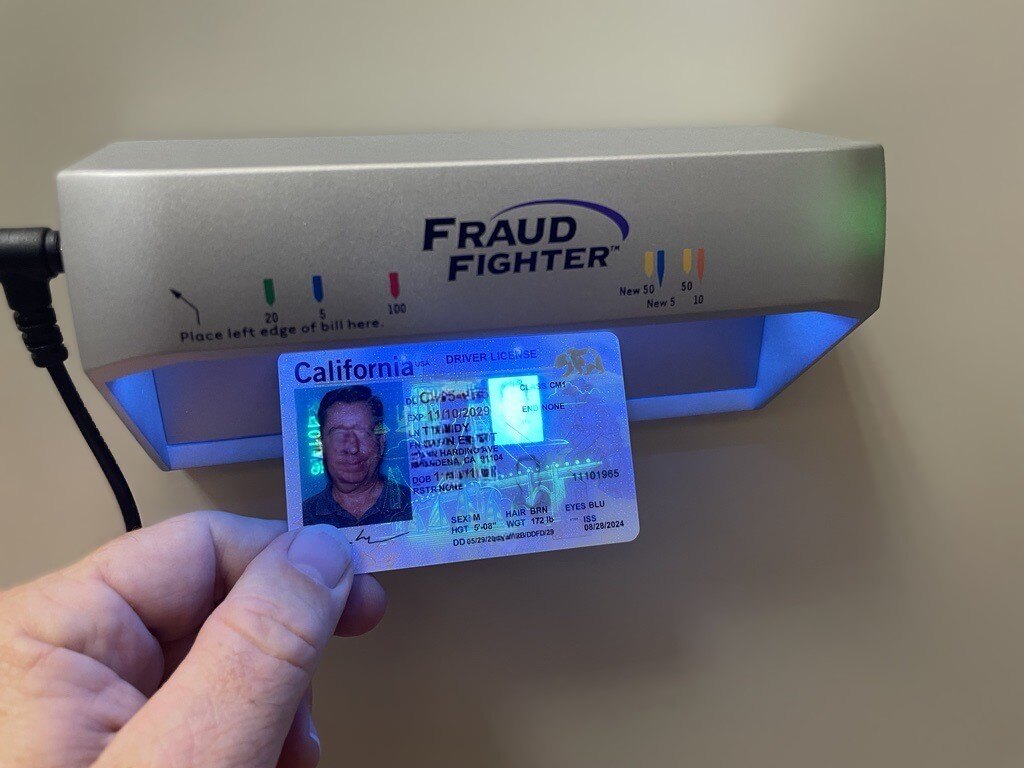
Detection methods include UV, MG, IR, image, size, and serial or MICR data features. Specify counterfeit screening requirements at count time. Do not claim all FraudFighter counters detect counterfeit notes without model-specific verification. The table below maps each method to what it checks.
|
Detection Method |
What It Checks |
Procurement Note |
|---|---|---|
|
Ultraviolet (UV) |
UV-reactive threads, fibers, and printing on notes and documents |
Confirm whether the check is automatic or requires operator judgment |
|
Magnetic ink (MG) |
Magnetic properties of genuine banknote ink |
Ask which denominations and series are covered |
|
Infrared (IR) |
IR-absorbing ink patterns not visible to the eye |
Often bundled with UV and MG on automatic units |
|
Image |
Printed design elements compared against stored references |
Confirm how reference data is updated |
|
Size |
Physical dimensions of the note |
A supporting check, not a standalone authentication method |
|
Serial number or MICR data |
Serial capture and magnetic character data |
Confirm whether records are stored, exportable, or display-only |
Organizations accepting high-value cash transactions should separate counting speed from authentication accuracy. Counterfeit fraud prevention requires documented procedures that extend beyond machine capabilities.
Exception and Escalation Workflows Require Documentation Before Go-Live
Document what happens when a note fails detection: who reviews it, where it is stored, whether a receipt or report is created, and whether the customer interaction is escalated. Define the exception procedure before go-live. Specify detection method and exception process in procurement requirements.
Staff must know how to handle suspect notes without disrupting normal cash operations. Exception workflows should support segregation of duties where compliance obligations or internal policy require dual control.
Staff Training Supports Counterfeit Screening
A counterfeit detector paired with a money counting machine requires staff exception workflow and training. Employees cannot be expected to spot sophisticated counterfeits through visual inspection alone. Equipment-assisted detection must integrate into repeatable cash-handling procedures that staff can execute consistently.
Training documentation should include screenshots, decision trees, and escalation contacts. Multi-location organizations benefit from standardized training materials that close exploitable gaps across sites.
Total Cost of Ownership Extends Past the Purchase Price
Equipment cost includes warranty coverage, maintenance requirements, downtime risk, and training burden. Compliance officers should evaluate total cost of ownership rather than initial purchase price.
|
Cost Factor |
What to Confirm Before Purchase |
Risk If Ignored |
|---|---|---|
|
Warranty terms |
Length, coverage, and whether replacement is box-swap |
Unbudgeted replacement cost mid-year |
|
Service turnaround |
Response time and availability of loaner units |
Control gaps while equipment is out of service |
|
Downtime |
Failure rate and manual fallback procedure |
Manual counting during peak volume increases error risk |
|
Consumables and calibration |
Maintenance intervals and consumable pricing |
Recurring cost that was never budgeted |
|
Training |
Time to competence for a new hire |
Inconsistent counting across shifts and sites |
|
Footprint and ergonomics |
Counter space, noise level, and screen readability |
Workflow bottlenecks at the counting station |
Warranty, Maintenance, and Support Affect Control Continuity
CountEasy carries a five-year box-swap warranty. CountEasy has documented 0.1% failure rate over five years. Warranty turnaround time and replacement equipment availability affect control continuity during peak cash periods.
Service response times matter when counting equipment fails during year-end retail traffic or month-end closeout procedures. Organizations should confirm vendor support capacity before finalizing procurement.
Downtime and Consumables Add Recurring Cost
Downtime during peak cash volume can force manual workarounds that introduce control gaps. CountEasy counts bills and coins six times faster than by hand. Manual counting increases labor cost and error risk when equipment fails during high-volume periods.
Consumables, calibration schedules, and cleaning requirements add recurring cost and staff time. Buyers should confirm maintenance intervals and consumable pricing before purchase.
Accessibility and Ergonomics Affect Daily Operation
Countertop footprint, screen readability, noise level, and tactile workflow affect staff efficiency and compliance. Equipment placement should support workflow without creating bottlenecks or requiring staff to work in awkward positions.
Organizations with multi-location operations benefit from standardized equipment that simplifies cross-site training and support.
Q4 Currency Counter Procurement Checklist for Compliance Officers
A structured procurement checklist converts operational needs into equipment specifications. Compliance officers should document requirements before requesting vendor proposals.
Core Questions to Answer Before Requesting Proposals
Work through each item below before you compare counterfeit detectors or counting machines. The answers become your specification.
|
Checklist Item |
What to Define |
Why It Matters |
|---|---|---|
|
Cash volume |
Bills and coins per day and per week, including peak periods |
Sets throughput class and the number of units per site |
|
Bill condition |
Loose, strapped, bundled, or mixed |
Determines feed type and batching requirements |
|
Coin handling |
Whether tills and drawers include coin |
Bill-only counters force a second device or manual counting |
|
Detection requirement |
Which methods must run at count time |
Prevents assumed capability that the model does not have |
|
Operators |
Cashiers, tellers, compliance staff, or back-office finance |
Sets interface complexity and training time |
|
Records needed |
What documentation is required after counting |
Aligns the machine with audit and examination expectations |
Procurement Should Align With Audit and Reporting Needs
Define what records are needed after counting. Do not claim audit-log, export, or serial-number tracking unless confirmed for the exact product. Audit requirements should drive reporting specifications during procurement evaluation.
Organizations subject to regulatory examinations should ensure counting equipment supports repeatable documentation. Digital logs, user permissions, and export formats must align with internal audit expectations and external examination procedures.
Vendor Capabilities and Documentation to Verify
Vendor documentation should include product specifications, training materials, maintenance schedules, warranty terms, and support response times. Organizations purchasing for multiple locations should confirm vendor capacity to support enterprise deployment.
Procurement teams should request references from organizations in similar industries and regulatory environments. Customer identification program requirements and other compliance obligations vary by sector.
Common Procurement Mistakes That Increase Audit Friction
Procurement errors introduce control gaps that surface during audits or regulatory examinations. Compliance officers should recognize common selection mistakes.
Buying by Price Alone Creates Control Risk
Buying by price only ignores total cost of ownership and control alignment. A currency counter can become a weak point in a compliance program if the wrong device is chosen. Low-cost equipment may lack denomination identification, counterfeit detection, or audit-trail features that compliance obligations require.
Price-focused procurement often delays consideration of training burden, maintenance cost, and downtime risk. Organizations discover equipment limitations after implementation when control gaps become apparent.
Ignoring Coin Handling or Detection Features Creates Gaps
Ignoring coins in the workflow forces staff to use separate equipment or manual counting that introduces control breaks. Assuming detection capabilities without verification leaves organizations exposed to counterfeit money. Buyers should confirm exact detection methods and test procedures before purchase.
Organizations that handle tills, drawers, or retail closeouts often underestimate coin volume until after equipment arrives. Specification errors require additional purchases or workaround procedures that undermine standardization.
Poor Documentation and Training Undermine Controls
Not documenting exceptions creates ambiguity when staff encounter suspect notes or equipment errors. No staff training leads to inconsistent cash handling and control gaps. Missing exception workflow prevents proper escalation when counterfeit currency or large cash transactions require compliance review.
No maintenance plan increases downtime risk and equipment failure during peak periods. No warranty plan exposes organizations to unbudgeted replacement costs when equipment fails.
Compliance Belongs in the Buying Decision From the Start
Compliance involvement at the procurement stage prevents control gaps and audit friction. Certain business segments and risk factors require early compliance input.
Business Segments That Need Early Compliance Input
Compliance officers, finance leaders, branch operations managers, casino and gaming compliance teams, retail loss-prevention leaders, and procurement teams are the buyers involved. Cash environments differ enough that the same machine rarely fits every segment.
|
Segment |
Cash Environment |
Compliance Priority |
|---|---|---|
|
Banks and credit unions |
Branch drawers, teller balancing, strapped bills |
Escalation procedures and reporting thresholds |
|
Casinos and gaming |
High-volume cage cash |
Title 31 context and suspicious-activity procedures |
|
Retail, convenience, and grocery |
Multiple tills, peak holiday volume, employee turnover |
Simple training and repeatable workflows |
|
Restaurants, bars, and clubs |
Cash drawers, tip-outs, night close, mixed staff access |
Easy reconciliation and access control |
|
Currency exchange and check cashing |
High sensitivity to denomination and authentication accuracy |
Strong detection workflow and documented exception handling |
Currency exchange and check cashing businesses combine that sensitivity with direct customer interactions, so compliance teams should review their exception handling before equipment is selected.
Compliance Teams Define Workflow and Exception Processes
Compliance teams should map cash flow from acceptance through counting to reconciliation and deposit. Exception escalation points must align with BSA obligations, suspicious activity reporting, and internal control requirements. Workflow documentation should specify who counts cash, who reviews exceptions, who reconciles discrepancies, and who approves high-value or suspect transactions.
Compliance review ensures counting equipment supports segregation of duties and audit trails. Equipment selection should follow workflow documentation rather than drive it.
Vendor Questions to Ask Before Purchase
Buyers should confirm delivery timeline, support turnaround time, warranty terms, detection methods, and what qualifies as a rejected or suspect note. Vendors should explain cleaning and calibration requirements, documentation availability, and multi-site deployment capacity. Organizations should request product demonstrations using their actual cash forms, denominations, and workflows.
Compliance officers should verify that vendor claims about detection accuracy, reporting features, and regulatory alignment match actual product capabilities.
Currency Counter Procurement as a Controlled Compliance Decision in Q4
Currency counter procurement requires compliance alignment rather than operational convenience alone. Equipment selection should follow cash workflow profiling, counterfeit control specification, and total cost evaluation that includes warranty coverage, training burden, and downtime risk. Organizations that involve compliance teams at the procurement stage create defensible equipment specifications that support audit-ready cash-handling procedures.
Q4 procurement offers budget alignment and implementation timing advantages when equipment delivery, staff training, and control documentation occur before year-end closeout pressures.
Match Your Q4 Requirements With FraudFighter™
FraudFighter™ has built currency authentication and cash-handling equipment for regulated environments since 2000, with more than 25,000 units installed across banks, casinos, retail chains, and hospitality groups. Our specialists work through cash volume, denomination mix, coin handling, and exception workflow with you before a budget is committed, so the specification matches the controls your examiners expect.
To align equipment with your Q4 requirements, contact FraudFighter™ and request more information. Call 888.664.9214 in the United States or 626.225.0203 internationally, or request a quote to speak with a specialist about your cash-handling environment.
Frequently Asked Questions
Q1. Does a currency counter satisfy Form 8300 reporting requirements?
A. No. Form 8300 applies when a trade or business receives more than $10,000 in cash in one transaction or in related transactions, and a counting machine neither creates nor discharges that obligation. The equipment supports the count accuracy, reconciliation, and escalation steps staff follow when a large cash event occurs. Filing responsibility stays with your compliance and finance teams. Confirm your filing obligations with counsel rather than with a vendor.
Q2. Which counterfeit detection methods should we specify in a purchase order?
A. Name the methods rather than accepting a general claim of counterfeit detection. Common methods include ultraviolet, magnetic ink, infrared, image comparison, size checks, and serial number or MICR data capture. Ask which methods apply to the exact model you are quoting and which are optional additions. Then document the exception procedure staff follow when a note is rejected.
Q3. Do currency counters handle coins as well as bills?
A. Many bill counters handle notes only. If your tills, drawers, or retail closeouts include coin, confirm coin capability before purchase or plan for a second device. Scale-based counters such as CountEasy count loose and strapped bills alongside loose and rolled coins from one desktop unit. Confirm the coin packaging your sites actually use, since rolled and loose coin are handled differently.
Q4. How long should a Q4 currency counter procurement take?
A. Build the timeline backward from year-end close rather than forward from the delivery date. Allow time for workflow profiling, vendor demonstrations with your own cash forms, compliance review of the exception procedure, delivery, installation, and staff training. Two to six weeks is realistic for a single site, while multi-location rollouts run longer because training and documentation have to be standardized first.
Q5. When should compliance review a currency counter purchase?
A. Compliance should review the specification before proposals go out, not after equipment arrives. Early review confirms that the counting workflow supports segregation of duties, exception escalation, and the documentation examiners request. It also catches specification gaps such as missing denomination recognition or absent count records. Late involvement usually means rework or a control gap that the next audit surfaces.