

 7 minute read
What Is a UV Counterfeit Detector and How Does It Actually Work?
UV counterfeit detector technology has become essential for businesses handling cash transactions daily. This device operation guide explains how ultraviolet light exposes hidden security elements that separate genuine currency from sophisticated counterfeits.
The technology protects revenue by revealing authentication features embedded during the official currency printing process. Understanding counterfeit money UV analysis helps businesses select appropriate counterfeit detection methods for their specific operational needs.
Key Takeaways
- UV detectors emit UV-A light at approximately 365nm wavelength to reveal fluorescent security features invisible to the naked eye
- Ultraviolet counterfeit detection accounts for 32.7% of total market revenue and offers verification in 2-5 seconds per note
- Two-thirds of domestically printed counterfeit bills are produced using laser and ink-jet home printer technologies
- UV detection devices range from $25-$75 for portable models to $300-$800 for professional systems
- Soft costs of fraud typically equal more than three times the face value of counterfeit bills accepted
What Is a UV Counterfeit Detector?
A UV counterfeit detector is a specialized device that uses ultraviolet light to identify authentic currency by revealing security features invisible under standard lighting. The device emits UV-A light at approximately 365nm wavelength to expose fluorescent fibers, security threads, and specialized inks embedded in genuine banknotes.
These detectors provide rapid authentication without requiring extensive training or complex interpretation. Businesses from small retail stores to high-volume banks rely on UV technology as a primary or supplementary verification method.
What Features Does It Detect in Currency?
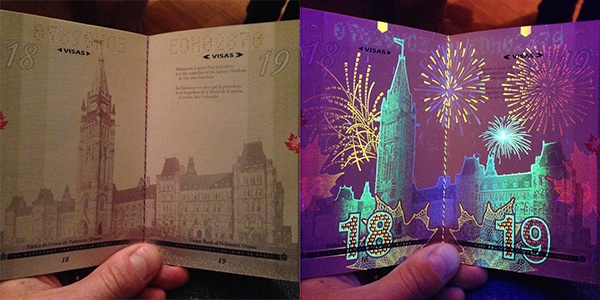
UV detectors reveal fluorescent fibers and security threads invisible to the naked eye. Genuine currency contains polymer-based security threads that glow in specific colors under ultraviolet light exposure.
The devices also identify fluorescent markings and invisible inks printed during official currency production. These authentication elements appear only when exposed to the correct UV wavelength.
What Types of UV Light Are Used?
UV detectors emit ultraviolet light, typically at UV-A wavelength around 365 nanometers, to reveal security features embedded in genuine currency. This specific wavelength activates fluorescent compounds without damaging the currency or posing safety risks to operators.
Professional-grade detectors may offer adjustable wavelength settings for different currency types. The UV-A spectrum provides optimal contrast between authentic security features and counterfeit reproduction attempts.
Why Are UV Counterfeit Detectors Important?
UV counterfeit detectors prevent significant financial losses by identifying fake bills before they enter cash drawers or bank deposits. Accepting counterfeit currency creates unrecoverable losses plus additional operational costs that multiply the initial damage.
The technology addresses the evolving nature of modern counterfeit money production methods. Detection becomes critical as counterfeiting shifts from large-scale criminal operations to localized digital printing.
How Do They Prevent Fraud and Losses?
Soft costs of fraud typically equal more than three times the face value of the fraud itself. These multiplier effects include lost productivity, wasted resources, operational disruption, and time spent investigating and documenting incidents.
Two-thirds of domestically printed counterfeit bills in the U.S. are produced using laser and ink-jet home printer technologies. This transformation makes counterfeiting accessible to individuals without specialized equipment or printing expertise.
Who Typically Uses UV Detectors and Why?
High-volume retail environments have 85-95% adoption rates because they process hundreds of cash transactions daily. Small businesses have 50-65% adoption rates, typically implementing portable UV devices as affordable protection against occasional counterfeit exposure.
North America has 75% adoption rates among cash-handling businesses, driven by mature retail infrastructure and regulatory compliance requirements. Urban areas demonstrate 70-80% adoption rates, while rural areas have 40-50% adoption rates due to lower transaction volumes.
How Does a UV Counterfeit Detector Work?
A UV counterfeit detector emits ultraviolet light onto currency to activate fluorescent security features embedded during official production. The operator places the banknote under the UV light source and observes whether security threads, fibers, or markings glow in the expected patterns and colors.
The verification process relies on visual comparison between the illuminated features and known authentic patterns. Genuine currency displays distinct fluorescent responses while most counterfeits either show no reaction or incorrect fluorescent colors.
What Is the Role of Fluorescent Fibers and Security Threads?
UV detectors reveal fluorescent fibers and security threads invisible to the naked eye. These embedded elements glow in specific colors—typically red, blue, or green—when exposed to ultraviolet light at the correct wavelength.
Security threads contain text and patterns that become visible only under UV illumination. The threads run vertically through genuine banknotes and cannot be successfully replicated using standard printing methods.
How Is Verification Performed and Interpreted?
UV verification takes 2-5 seconds per note once the operator positions the currency under the light source. The cashier or clerk observes whether the expected fluorescent features appear in the correct locations and display proper color characteristics.
Visual content for fraud prevention training helps operators recognize authentic patterns and common counterfeit variations. Consistent verification protocols ensure detection accuracy across different shift workers and business locations.
What Are the Key Advantages and Limitations of UV Detection?
UV detection offers rapid verification and minimal training requirements, making it accessible for businesses of all sizes. The technology provides effective protection against common counterfeits while maintaining affordable price points for budget-conscious operations.
However, ultraviolet counterfeit detection relies on single-feature verification that sophisticated counterfeiters can potentially compromise. Understanding both strengths and vulnerabilities helps businesses implement appropriate multi-layer authentication strategies.
What Makes UV Detectors Effective and Accessible?
UV technology accounts for 32.7% of total revenue in 2025, dominating the counterfeit detection market through widespread adoption. UV lights are ideal for small businesses at price points from $50-$150, offering professional authentication without significant capital investment.
The devices require no electrical connections in battery-powered portable models, enabling verification anywhere cash changes hands. Immediate visual feedback allows operators to make authentication decisions without specialized technical knowledge.
What Are Common Vulnerabilities or Drawbacks?
UV detectors are vulnerable to sophisticated counterfeits using fluorescent inks that mimic authentic security responses. Determined counterfeiters add fluorescent compounds to reproduce the glow patterns observed in genuine currency under UV illumination.
UV detectors rely on single-feature checks and require manual interpretation, creating opportunities for human error. Worn genuine bills may display weakened fluorescent responses, potentially causing false rejections during rushed transactions.
How Does UV Detection Compare to Other Counterfeit Technologies?
UV detection provides cost-effective entry-level protection while magnetic and infrared technologies offer additional verification layers. Each authentication method targets different security features, creating complementary protection when combined in multi-technology devices.
Price points, verification speed, and operational requirements vary significantly across counterfeit detectors using different technologies. Business size, transaction volume, and budget constraints determine which approach delivers optimal protection.
What Distinguishes UV From Magnetic Ink Detection?
UV detectors range from $25-$75 for budget portable units, $100-$300 for mid-range desktop models, and $300-$800 for professional systems. Magnetic ink detectors cost $80-$150 for basic models, $150-$350 for mid-range units, and $350-$1,000+ for professional-grade devices.
Magnetic ink detectors have slower verification speeds and require calibration for different currencies. Magnetic sensors analyze the presence and distribution of magnetic ink patterns specific to authentic notes.
Magnetic ink detection captures approximately 20% of the market, positioned as a complementary technology to UV verification. The two methods combined provide stronger protection than either technology alone.
When Is UV Detection Preferred Over Multi-Technology Devices?
Hybrid systems offer a middle ground for mid-sized retailers at price points from $200-$500. These devices combine UV verification with magnetic or infrared scanning to increase detection accuracy without requiring full automatic counting systems.
Businesses processing fewer than 100 cash transactions daily typically choose standalone UV devices for simplicity. Multi-technology devices become cost-justified when transaction volumes exceed 200 bills daily or when regulatory compliance mandates multiple verification methods.
How Do Businesses Implement UV Counterfeit Detection?
Successful implementation matches device capabilities to specific operational environments and transaction volumes. Selection criteria include physical space constraints, electrical requirements, employee training capacity, and budget allocation for fraud prevention.
Operational integration requires standardized verification protocols across all cash-handling employees. Consistency in detection procedures prevents gaps that sophisticated fraud attempts exploit through location-specific vulnerabilities.
What Device Types Suit Different Business Sizes and Needs?
UV lights ideal for small businesses cost $50-$150 and provide portable verification for occasional cash transactions. Money scanners necessary for high-volume environments cost $600+ and process hundreds of bills per shift with automatic multi-technology authentication.
Automatic money counters range from $300-$600 for entry-level models, $600-$1,200 for mid-range professional units, and $1,200-$2,500+ for premium bank-grade systems. These devices integrate counting functionality with comprehensive authentication to eliminate manual verification steps.
What Operational Practices Optimize Detection Accuracy?
Accuracy and reliability influence 30% of purchasing decisions because detection failures create immediate financial losses. Speed of detection influences 24% of purchasing decisions, particularly in high-volume environments where verification cannot disrupt customer flow.
Ease of use influences 20% of purchasing decisions since complex devices increase training time and operator errors. Regular training refreshers and clear verification protocols ensure consistent authentication across employee shifts and retail locations.
What Are Practical Use Cases and Success Stories of UV Detectors?
Real-world implementations demonstrate how UV detection protects revenue across diverse business environments. Case studies reveal the financial impact of proper device selection and employee training protocols.
Success stories highlight the importance of matching device capabilities to operational requirements. Businesses achieve measurable ROI when detection methods align with transaction volumes and counterfeit exposure risks.
How Have Retail and Hospitality Sectors Benefited?
BrightMart Retail Chain implemented high-speed, multi-test counterfeit detection devices with QR codes linking to online training. The approach drastically reduced counterfeit bill acceptance while improving cashier efficiency without disrupting customer experience.
A New York City Sports Bar used high-powered UV detectors to eliminate over $10,000 in counterfeit losses in the first year. The fast detection process proved ideal for low-light, fast-paced environments without slowing bartender service.
What Portable UV Solutions Aid Mobile or Small Businesses?
A mobile food truck business saved over $2,000 in fake currency losses within six months using compact, battery-powered dual detectors. The portable solution allowed instant bill verification before making change without requiring electrical outlets.
The battery-powered design supports outdoor events and mobile operations where traditional desktop detectors cannot function. Immediate verification prevents unrecoverable losses from counterfeit bills discovered during bank deposits.
The Role and Impact of UV Counterfeit Detectors in Effective Currency Authentication
UV counterfeit detector technology delivers accessible protection against the most common counterfeit production methods used today. These devices provide rapid verification that integrates into existing cash-handling workflows without requiring extensive employee retraining or operational disruption.
Understanding how UV detection fits within comprehensive fraud prevention strategies helps businesses allocate resources effectively. The technology serves as either a standalone solution for low-volume operations or a foundational layer in multi-technology authentication systems.
FraudFighter specializes in implementing detection solutions that match operational requirements to measurable risk reduction. Professional guidance ensures businesses select devices that deliver verifiable ROI within weeks rather than months.
Find the Right UV Counterfeit Detection for Your Business
UV detectors only work when they match how your team actually handles cash. FraudFighter has spent 25+ years engineering counterfeit detection devices — from the ULED-2000 manual UV scanner to the fully automatic CT-600 — for retailers, banks, casinos, and restaurants of every size. Wells Fargo prevented nearly $200,000 in counterfeit losses across 100 branches in a single 30-day pilot, a 2,000%+ ROI in the first month alone. To protect your business, contact FraudFighter for a free consultation and we'll match the right device to your transaction volume, workflow, and budget.